The Exiled God of Wealth: From Kubera to Vaiśravaṇa
How a Hindu Treasurer Became a Buddhist Warrior-King

Long before he stood armored at the gates of Buddhist temples, before he rode a Snow Lion in Tibetan Thangka paintings, before he was known as Jambhala, Zambala, Duowen Tianwang, or Bishamonten he was Kubera.
Or Kuvera.
The god of wealth.
In Hindu mythology, Kubera is not born into obscurity. He is the son of the sage Vishrava and the half-brother of Ravana, the future king of Lanka. In fact, the golden city of Lanka was once Kubera’s own kingdom. He ruled it as the divine treasurer of the gods, custodian of unimaginable riches, and king of the Yakshas 'the mysterious nature-spirits who guarded hidden treasures beneath mountains and forests'.
But myth rarely allows stability.
Ravana seized Lanka, driving Kubera from his throne. Exiled yet unbroken, Kubera withdrew to the Himalayas and established his celestial city of Alakapuri. From there, he assumed a role that would define him for centuries: guardian of wealth and protector of the northern direction. As one of the Lokapālas, Kubera became the watchful sovereign of the North 'a directional authority that would remain constant even as religions evolved around him'.
Kubera in Hindu Tradition
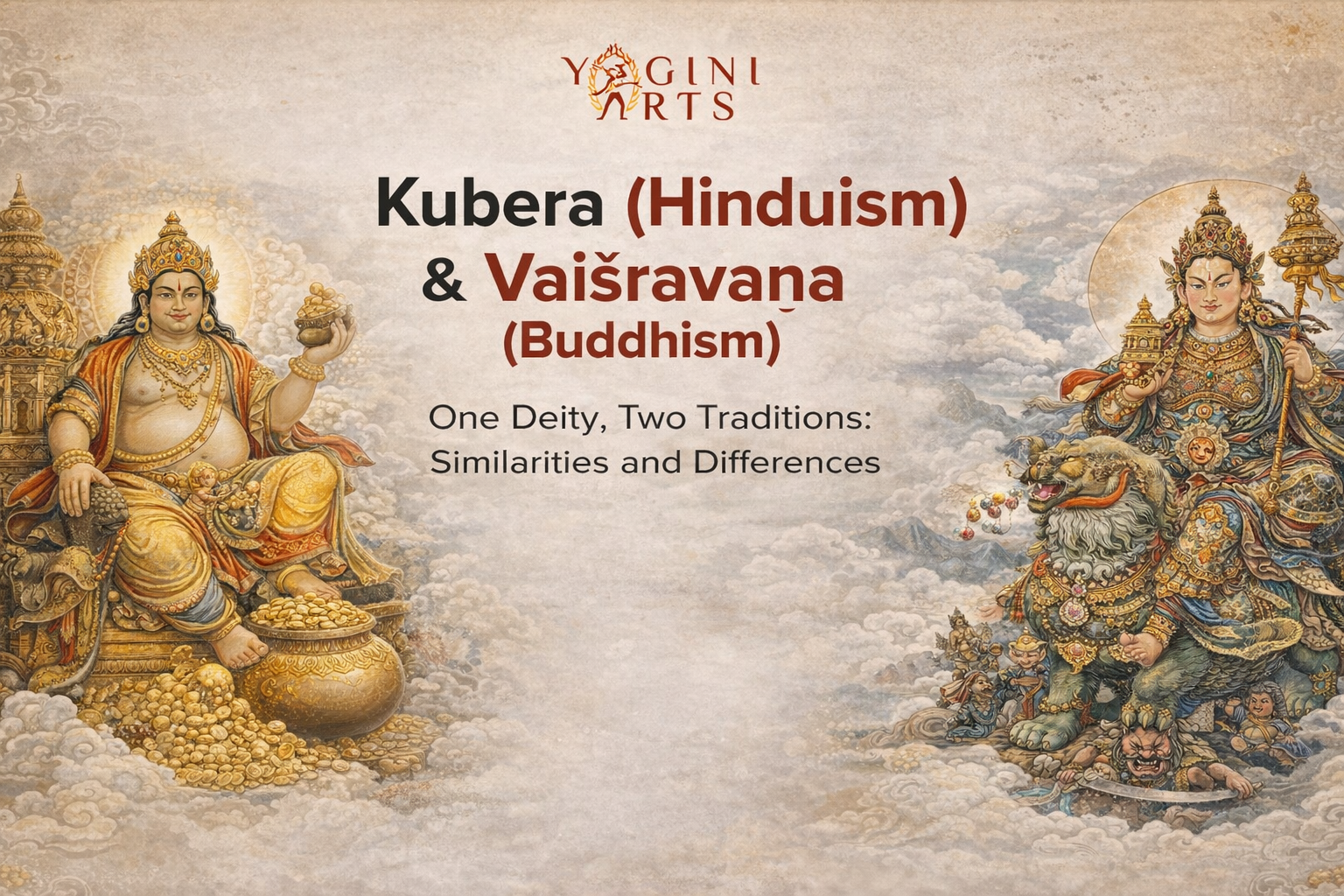
In Hindu art, Kubera appears unmistakable. Pot-bellied, adorned with jewels, holding a treasure pot overflowing with gold. Sometimes a mongoose rests in his hand, spitting jewels 'a symbol not of greed, but of controlled abundance'. Kubera does not represent reckless luxury; he represents wealth governed by order, prosperity aligned with dharma. He is structure, treasury, accumulation under cosmic law.
Core Identity in Hinduism
-
Divine treasurer of the gods
-
King of the Yakshas
-
Former ruler of Lanka
-
Guardian of the North
-
Symbol of structured wealth aligned with dharma
The Transformation in Buddhism
Then Buddhism rose and spread across the Indian subcontinent.
And Kubera did not disappear.
He transformed.
In Buddhist cosmology, Kubera re-emerges as Vaiśravaṇa also written Vaisravana, one of the Four Heavenly Kings (Caturmahārāja) who guard the cardinal directions around Mount Meru. Once again, he protects the North. But something has changed. The treasurer has become a warrior.
No longer simply seated among riches, Vaiśravaṇa stands armored, holding a pagoda or banner, commanding celestial armies. His responsibility is no longer merely wealth; it is the defense of the Dharma. Material prosperity remains part of his identity, but it is subordinated to protection of sacred truth.
This transformation is not accidental. Buddhism reframes wealth. Riches are not ends in themselves they are tools. Resources exist to support spiritual practice, sustain monasteries, and remove obstacles to enlightenment. In this shift, Kubera becomes more than a god of treasure; he becomes a guardian of wisdom.
Core Identity in Buddhism
-
One of the Four Heavenly Kings
-
Guardian of the North
-
Defender of the Dharma
-
Commander of celestial armies
-
Wealth reinterpreted as support for enlightenment
Regional Evolutions Across Asia
As Buddhism traveled across Asia, the deity evolved further.
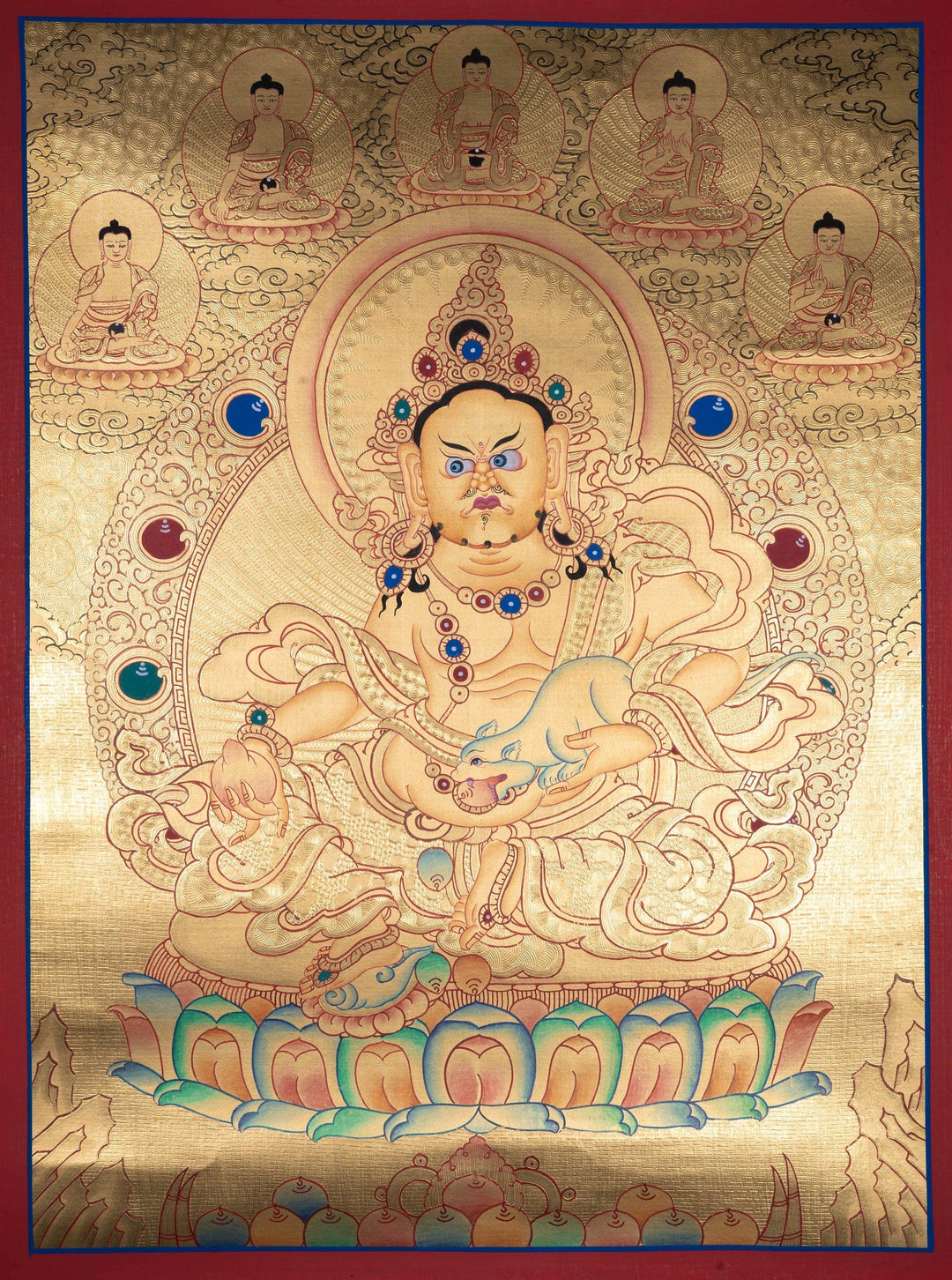
In Tibet, Vaiśravaṇa becomes Jambhala often spelled Zambala, one of the most recognizable wealth deities in Thangka art. In Tibetan Thangka paintings, Jambhala sits powerfully upon a Snow Lion, holding a mongoose that pours forth jewels. His expression is fierce, not indulgent. The message is clear: wealth must be protected and directed toward higher purpose. Jambhala rituals are performed not for extravagance, but to remove poverty and generate merit for spiritual growth.
In China, he appears as Duowen Tianwang, the Northern Heavenly King stationed at temple gates. Armored and imposing, he holds a pagoda symbolizing authority over sacred space. Worshippers entering a temple pass beneath his watchful presence. The northern guardian remains vigilant.
In Japan, he becomes Bishamonten, one of the Seven Lucky Gods. Here he merges martial strength with fortune, protector of warriors and bringer of prosperity. Though culturally distinct, Bishamonten’s lineage traces directly back to Kubera — the exiled ruler of Lanka.
Regional Names and Forms
-
Kubera / Kuvera (Hinduism)
-
Vaiśravaṇa / Vaisravana (Buddhism)
-
Jambhala / Zambala (Tibet)
-
Duowen Tianwang (China)
-
Bishamonten (Japan)
Continuity Beneath Change
Across these transformations Kubera, Kuvera, Vaiśravaṇa, Vaisravana, Jambhala, Zambala, Duowen Tianwang, Bishamonten 'one constant remains: the North'. Directional guardianship anchors his identity even as theological emphasis shifts. The Hindu treasurer becomes the Buddhist warrior-king, yet the axis of protection endures.
For collectors and seekers in the Thangka market, understanding these name variations is essential. Kubera may not be the most commonly searched term, but Vaisravana Thangka, Jambhala Thangka, Zambala Thangka, Duowen Tianwang statue, or Bishamonten art all refer to this same evolving deity. Behind each regional form stands the same mythic figure reshaped, but not erased.
Conclusion: Armored, Vigilant, Eternal
The story of Kubera to Vaiśravaṇa is not a story of replacement. It is a story of adaptation. Hindu cosmology preserves him as the lord of structured wealth. Buddhist cosmology elevates him as a defender of spiritual order. Material treasure becomes moral guardianship. Prosperity becomes protection.
The exiled king of Lanka did not fade into obscurity.
He rose again "Armored, Vigilant, Eternal — still watching the North".