Understanding Shakyamuni Buddha in Thangka Painting
Symbols, Iconography, and the Story of Enlightenment
Across Himalayan monasteries and Tibetan Thangka paintings, one figure appears with serene consistency: Shakyamuni Buddha 'the historical Buddha', Siddhartha Gautama. Unlike highly symbolic tantric deities surrounded by flames and multiple arms, Shakyamuni is often depicted with simplicity and composure. Yet every element in his image carries layered philosophical meaning.
To understand a Shakyamuni Thangka is to understand the visual language of enlightenment itself.
The Bhumisparsha Mudra: Calling the Earth to Witness
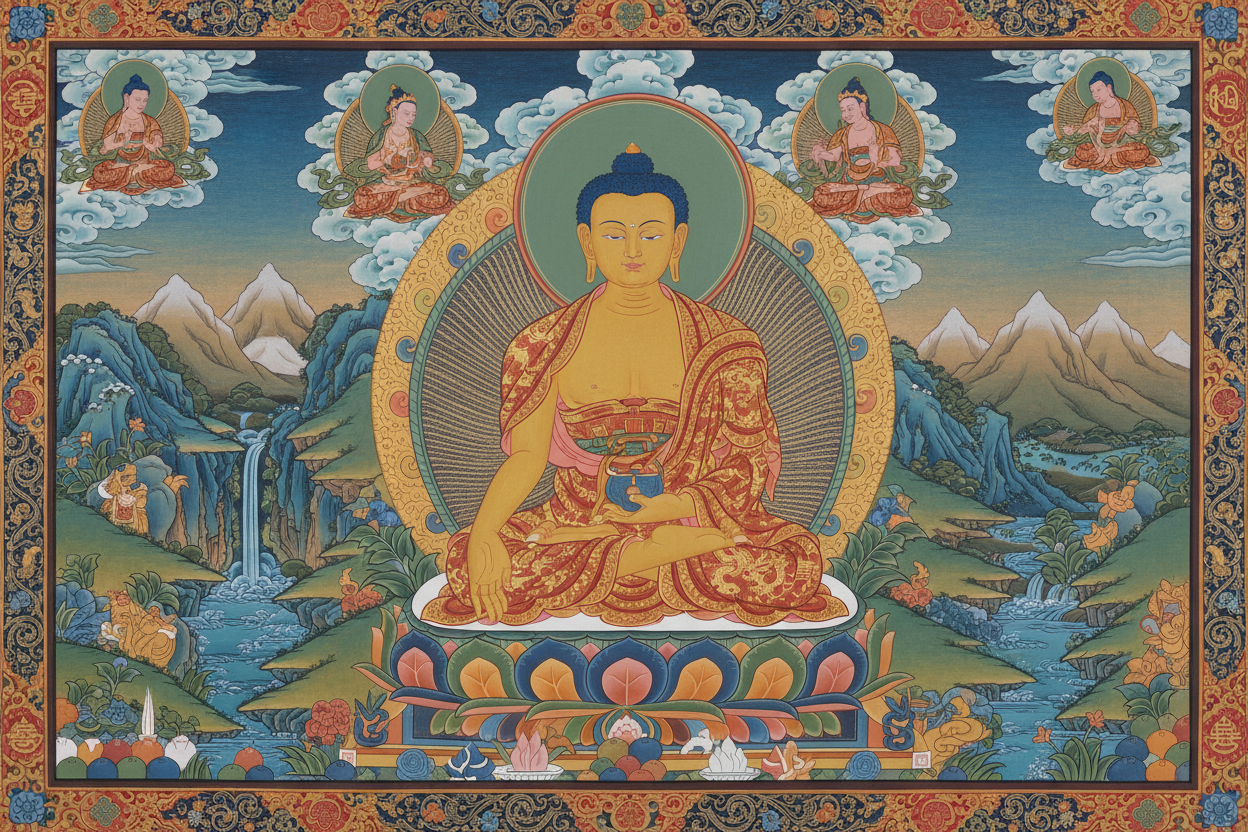
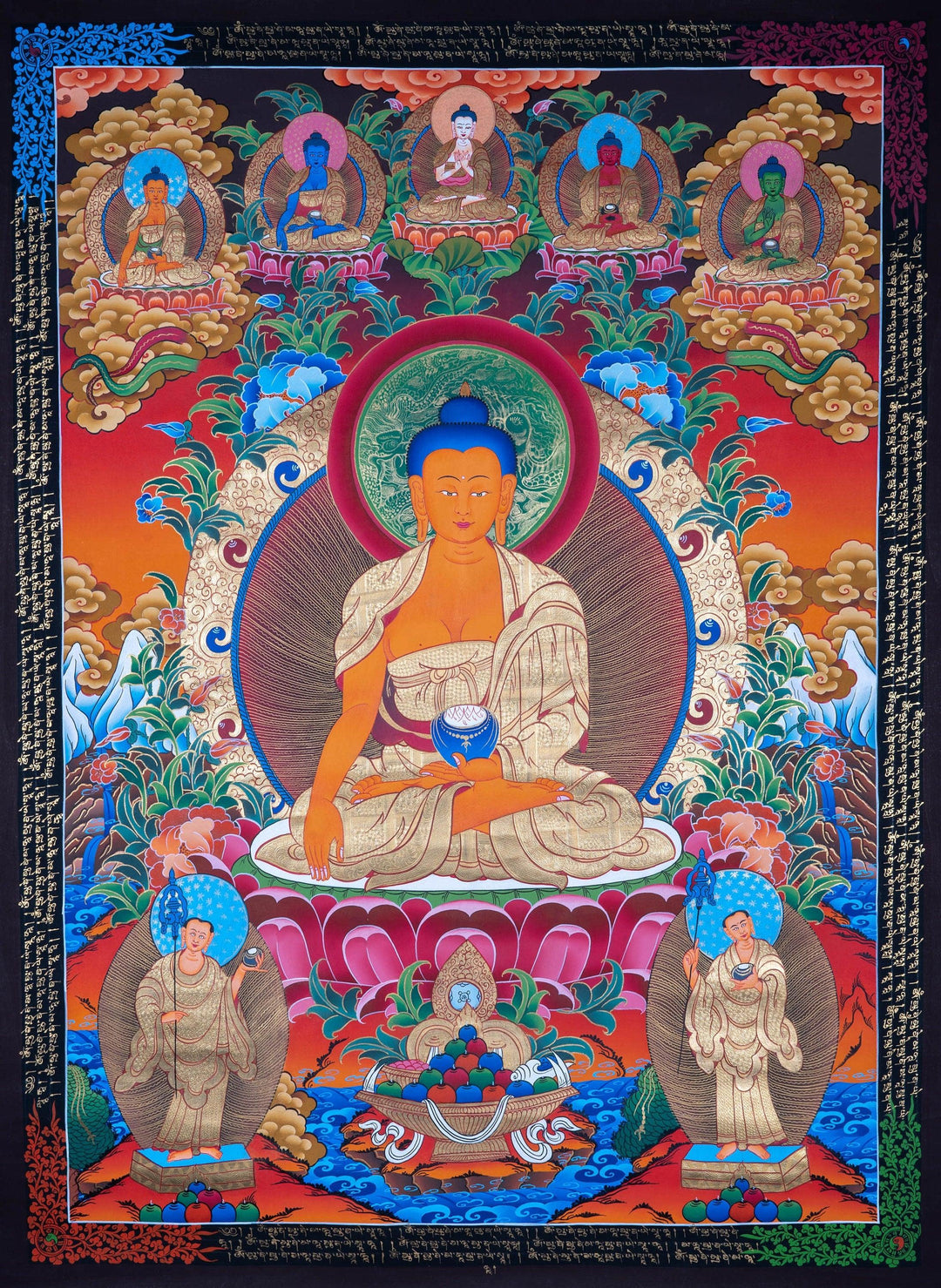
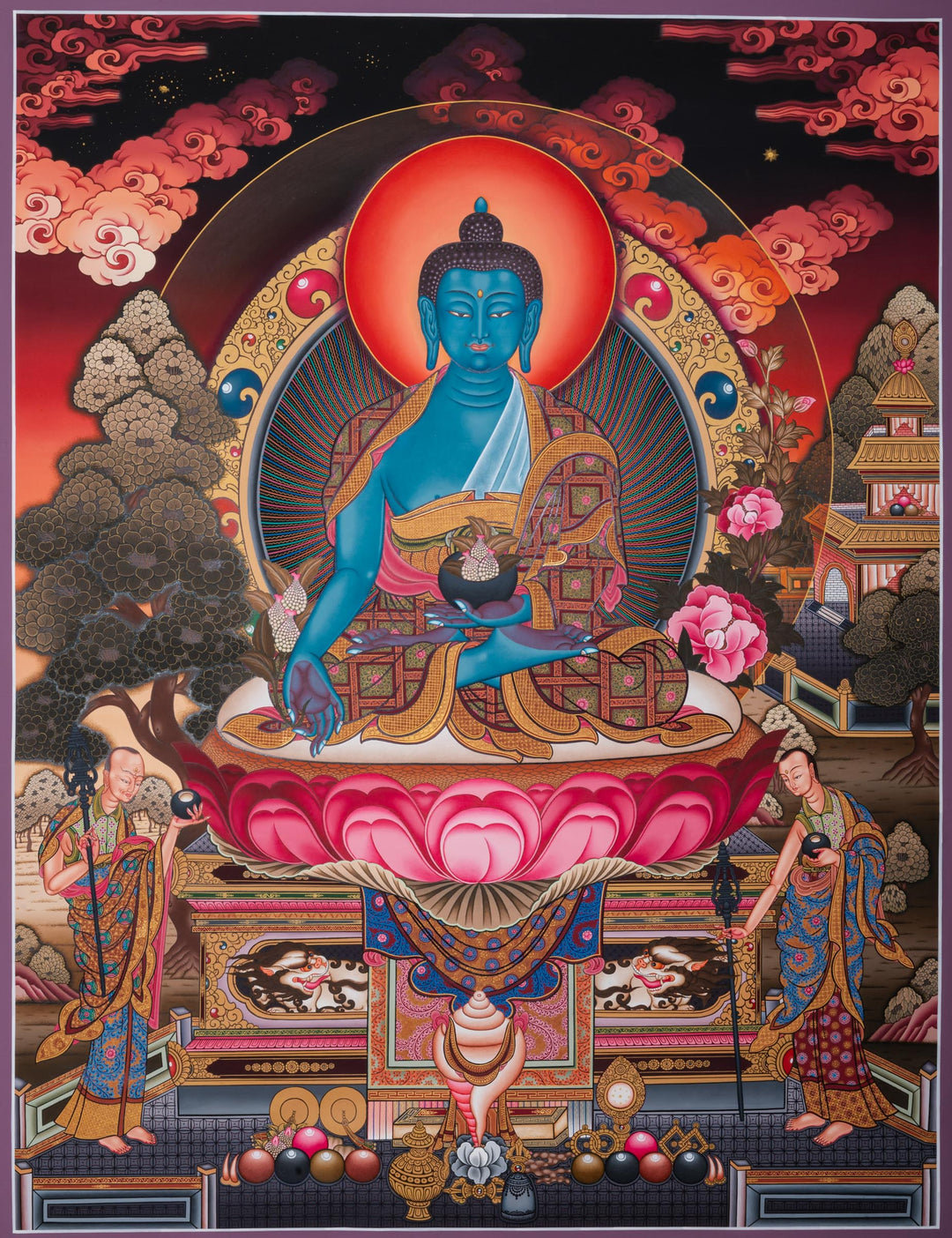
In most Thangka depictions, Shakyamuni Buddha sits in meditation with his right hand extended downward, fingers touching the earth. This gesture is known as the Bhumisparsha mudra, or the “earth-touching gesture.”
This moment refers to the pivotal event beneath the Bodhi tree when Siddhartha was challenged by Māra, the embodiment of delusion and temptation. Māra questioned his right to attain enlightenment. In response, Siddhartha touched the earth, calling it to witness the countless lifetimes of merit he had accumulated.
The earth trembled in affirmation.
In Thangka painting, this mudra symbolizes:
-
Unshakable resolve
-
Victory over illusion
-
The legitimacy of awakening
-
The grounding of enlightenment in lived effort
It is not a dramatic gesture. It is calm, decisive, and final.
The Alms Bowl: Renunciation and Sustenance
Resting in his left hand, often held in meditation posture, is the alms bowl. At first glance, it appears simple, even ordinary. But in Buddhist iconography, the alms bowl represents renunciation, discipline, and spiritual humility.
After leaving his royal life, Siddhartha adopted the life of a wandering ascetic. The bowl became his only possession of significance. It symbolized dependence not on wealth, but on generosity. It also represented balance 'taking only what is necessary'.
In Thangka art, the bowl reminds viewers that enlightenment was not achieved through luxury or power, but through restraint and disciplined simplicity.
It signifies:
-
The Middle Way
-
Freedom from attachment
-
The interdependence between monastic and lay communities
The bowl is empty of excess — and full of meaning.

The Bodhi Tree: The Axis of Awakening
Behind or above Shakyamuni Buddha in many Thangkas stands the Bodhi tree. This tree marks the exact location where enlightenment occurred in Bodh Gaya.
In visual symbolism, the Bodhi tree represents more than a botanical detail. It signifies:
-
Stability
-
Shelter
-
Cosmic alignment
-
The living witness to awakening
The tree becomes an axis between earth and sky — grounding the Buddha while stretching toward transcendence. Its presence situates the image historically while elevating it cosmologically.
Under this tree, Siddhartha ceased to be merely a seeker.
He became the Buddha — the Awakened One.

The Monastic Robes: Simplicity as Authority
In contrast to elaborate tantric deities adorned with crowns and jewels, Shakyamuni Buddha is dressed in simple monastic robes. These robes, typically rendered in saffron or deep maroon in Thangka paintings, signify renunciation of worldly identity.
Yet this simplicity is deliberate.
The robes communicate:
-
Discipline
-
Ethical restraint
-
Commitment to the monastic path
-
Authority derived from wisdom, not status
Unlike kings who display power through ornamentation, the Buddha’s authority emerges through absence. The robe is not decorative; it is declarative.
It proclaims freedom from possession.

The Enlightenment Story: From Prince to Buddha
Every Shakyamuni Thangka ultimately points back to a narrative — the journey of Siddhartha Gautama.
Born a prince, shielded from suffering, Siddhartha encountered old age, sickness, and death. Confronted with impermanence, he renounced palace life in search of truth. Years of extreme asceticism proved insufficient. Realizing that self-mortification was as flawed as indulgence, he embraced the Middle Way.
Seated beneath the Bodhi tree, he meditated through the night. Māra tempted him with fear and desire. He remained unmoved. As dawn broke, he attained enlightenment.
This story is not merely biography. It is doctrine embodied in narrative form. It teaches:
-
Impermanence
-
The reality of suffering
-
The possibility of liberation
-
The power of disciplined awareness
Every visual element in a Shakyamuni Thangka echoes this story.

Reading a Shakyamuni Thangka Correctly
To the untrained eye, a Shakyamuni Buddha Thangka may appear minimal compared to more complex tantric compositions. Yet its simplicity is intentional. The focus is not on cosmic spectacle, but on the interior revolution of awakening.
When viewing or collecting a Shakyamuni Thangka, one is not simply acquiring art. One is engaging with a visual teaching:
The earth-touching hand affirms earned awakening.
The alms bowl embodies restraint and balance.
The Bodhi tree anchors the moment of transformation.
The robes declare renunciation as power.
Together, they tell the story of enlightenment without a single word.