The Wheel of Life Thangka: A Sacred Mirror of Existence
The Wheel of Life Thangka, also known as the Bhavachakra, is one of the most profound visual teachings in Tibetan Buddhism. Rich in symbolism and philosophical depth, this sacred artwork illustrates the cycle of existence, the roots of suffering, and the path toward liberation. More than a decorative painting, it serves as a contemplative guide—inviting viewers to reflect deeply on their actions, states of mind, and spiritual journey.

Introduction: Art as a Spiritual Teaching
In the vibrant tapestry of Tibetan Buddhist art, the Wheel of Life Thangka stands as a visual embodiment of cosmic wisdom. Every figure, color, and segment within this circular mandala conveys essential teachings about impermanence, karma, and enlightenment. Traditionally displayed in monasteries and meditation spaces, the Wheel of Life functions as a silent teacher—guiding practitioners and observers alike toward greater awareness.
The Canvas of Existence
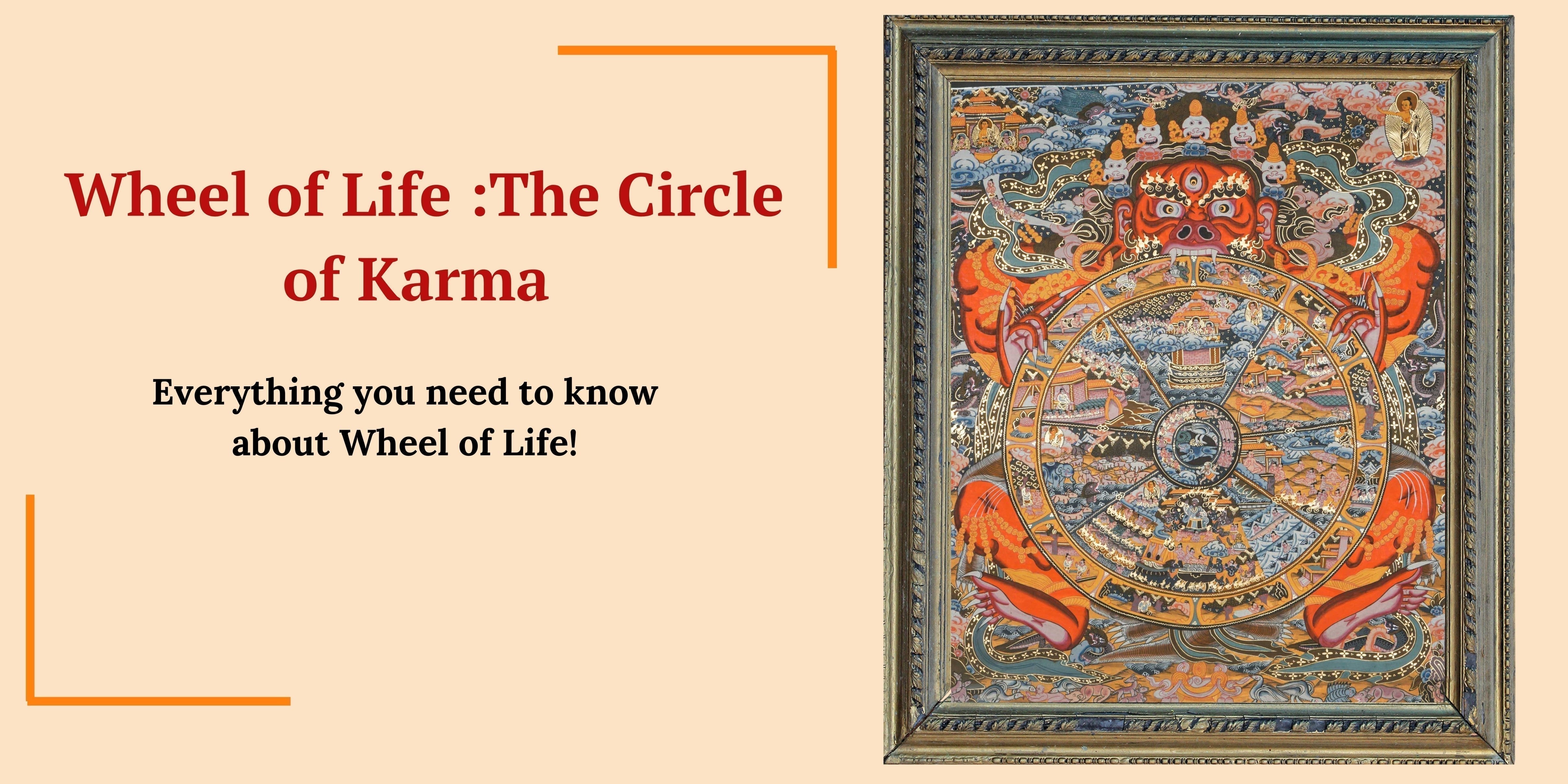
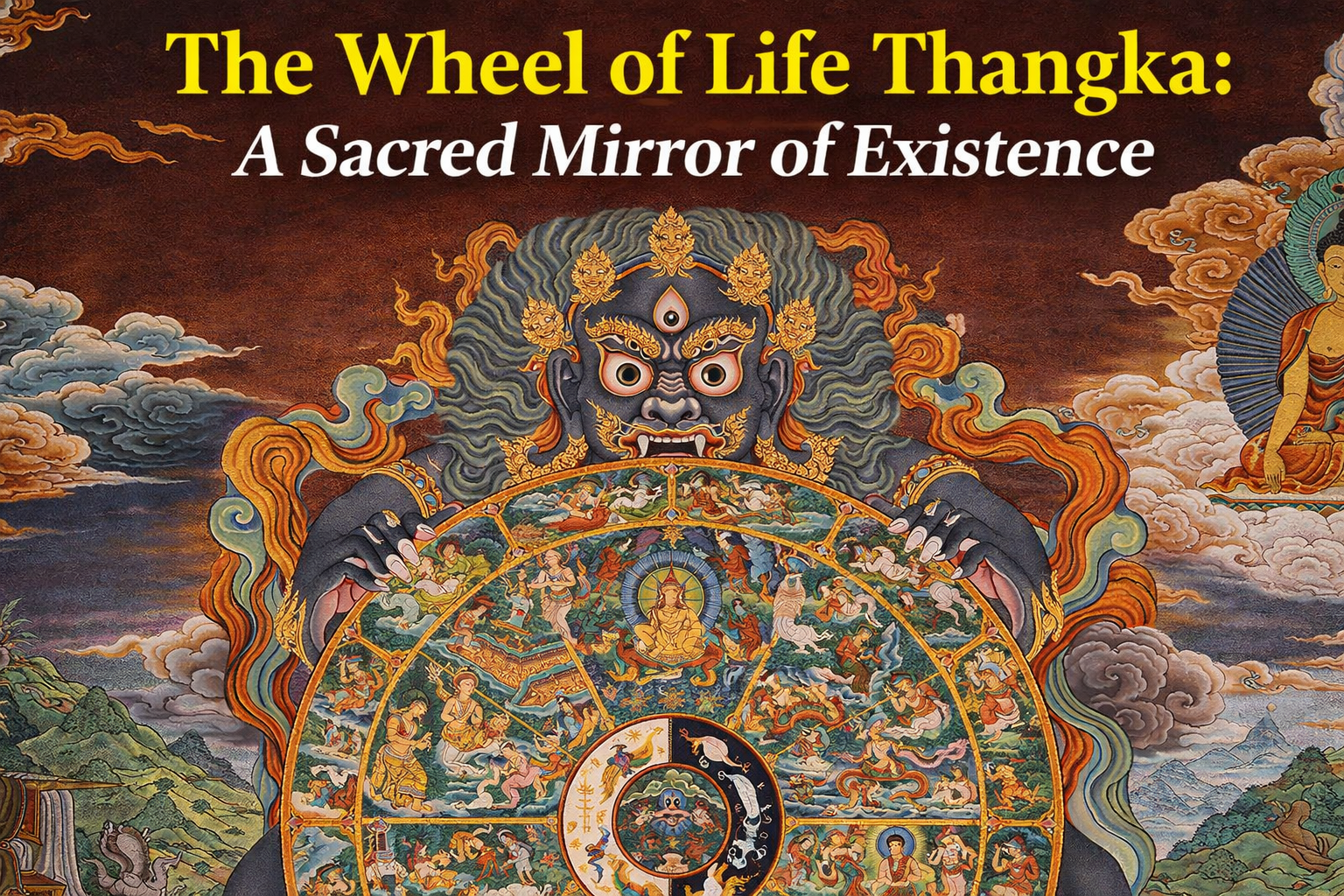
The Wheel of Life is structured as a vast circular mandala that represents samsara—the endless cycle of birth, death, and rebirth. Its outer rim depicts the Twelve Links of Dependent Origination, illustrating how ignorance gives rise to suffering through a chain of causes and conditions. This visual sequence emphasizes that nothing exists independently; all phenomena arise through interdependence.
The Cosmic Guardian: Yama
At the center of the composition, the wheel is held firmly by Yama, the lord of death. His presence is not meant to inspire fear, but awareness. Yama symbolizes impermanence and the law of karma, reminding us that all conditioned existence is temporary. The grip of Yama signifies how beings remain bound to samsara as long as ignorance and attachment persist.
The Twelve Links of Dependent Origination
Encircling the wheel, these twelve interconnected stages explain how suffering arises and perpetuates itself:
-
Ignorance (Avijja) – Misunderstanding the true nature of reality
-
Formations (Sankhara) – Volitional actions shaped by ignorance
-
Consciousness (Vinnana) – Awareness conditioned by past actions
-
Name and Form (Nama-rupa) – The mental and physical components of existence
-
Six Senses (Salayatana) – Eye, ear, nose, tongue, body, and mind
-
Contact (Phassa) – Interaction between senses and objects
-
Feeling (Vedana) – Pleasant, unpleasant, or neutral sensations
-
Craving (Tanha) – Desire arising from feeling
-
Grasping (Upadana) – Attachment and clinging
-
Becoming (Bhava) – Actions shaping future existence
-
Birth (Jati) – Manifestation into a new life
-
Old Age and Death (Jaramarana) – Decay, aging, and death
Together, these links explain how liberation becomes possible only when ignorance is overcome.
The Six Realms of Existence
Within the wheel are six realms, each representing distinct psychological and existential states:
-
Gods (Devas): A realm of pleasure and abundance, yet still bound by impermanence.
-
Titans (Asuras): Characterized by jealousy, conflict, and ambition.
-
Humans: The most precious realm, where awareness and enlightenment are attainable.
-
Animals: Marked by instinct, ignorance, and habitual behavior.
-
Hungry Ghosts (Pretas): Beings consumed by craving and dissatisfaction.
-
Hells (Naraka): States of intense suffering resulting from hatred and harmful actions.
These realms are not merely external worlds but reflections of inner mental states experienced in daily life.
The Hub of Suffering and the Key to Liberation
At the very center of the wheel lie three animals chasing one another—the rooster, snake, and pig. They symbolize the Three Poisons: desire, hatred, and ignorance. These are the fundamental causes that keep beings trapped in samsara. Buddhist practice aims to transform these poisons through wisdom, ethical discipline, and compassion.
Why the Wheel of Life Thangka Matters Today
In a modern context, the Wheel of Life Thangka remains deeply relevant. It serves as a mirror, reflecting our emotional habits, attachments, and fears. As a meditation aid, it encourages mindful living and ethical awareness. As an artwork, it stands as a timeless synthesis of philosophy, psychology, and spiritual insight.
Conclusion: A Living Teaching

The Wheel of Life Thangka is far more than a sacred painting—it is a complete visual teaching on the nature of existence. Through contemplation of its imagery, one is gently guided to examine personal choices, understand suffering, and cultivate the wisdom necessary for liberation. Displayed in a home, meditation space, or temple, it continues to inspire reflection, compassion, and transformation.