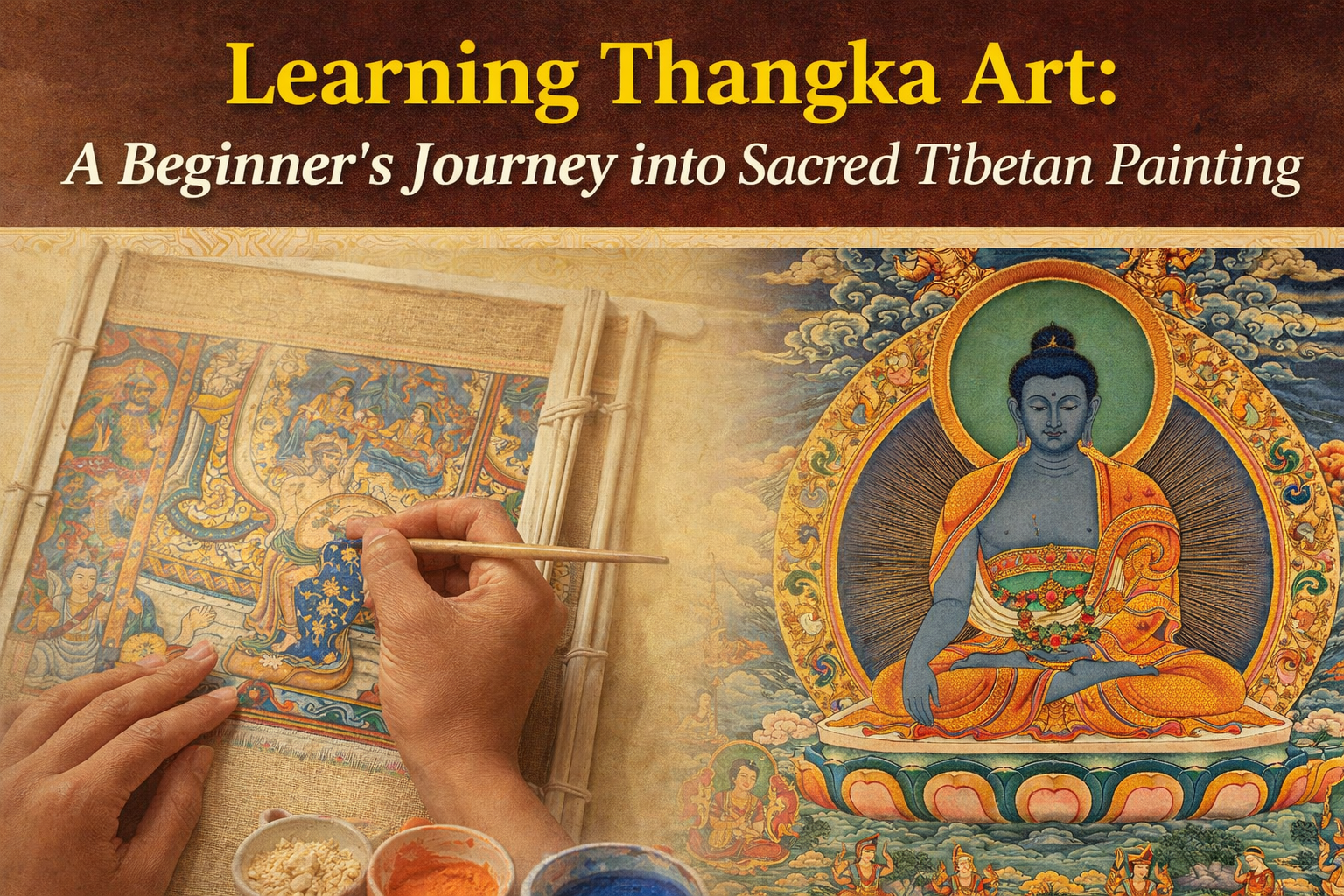
Learning Thangka Art: A Beginner’s Journey into Sacred Tibetan Painting
Thangka painting is more than an artistic practice—it is a spiritual discipline rooted in Tibetan Buddhism. For centuries, Thangkas have served as visual scriptures, meditation aids, and vessels of sacred knowledge. This blog introduces beginners to the foundations of Thangka art, exploring its meaning, learning process, and spiritual significance.
Introduction: Why Learn Thangka Art
Learning Thangka art is a journey that blends devotion, discipline, and creativity. Unlike conventional painting, Thangka follows strict iconographic rules passed down through generations. Each line, color, and proportion carries symbolic meaning, making the learning process both intellectually enriching and spiritually grounding.
For beginners, studying Thangka art offers an opportunity to slow down, cultivate focus, and connect with timeless Buddhist teachings through visual expression.
What Is Thangka Painting?

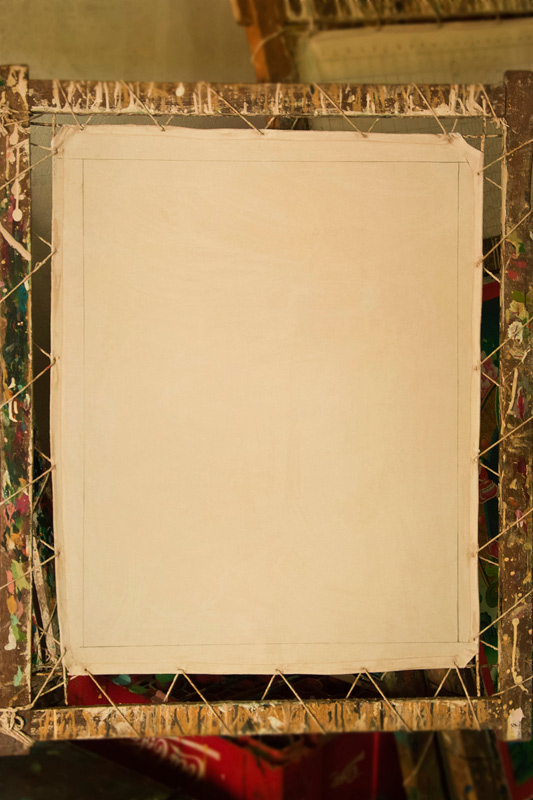
A Thangka is a traditional Tibetan scroll painting, usually depicting Buddhas, Bodhisattvas, mandalas, or protective deities. Traditionally painted on cotton or silk, Thangkas are used for teaching, ritual practice, and meditation.
Learning Thangka is not about artistic freedom alone—it is about accuracy, patience, and respect for sacred geometry. The painter does not invent forms but learns to faithfully transmit spiritual knowledge through art.
Foundations of Learning Thangka
1. Understanding Symbolism
Before touching a brush, students study symbolism. Colors, hand gestures (mudras), postures, and attributes all convey specific meanings. This theoretical grounding ensures that the artwork remains spiritually authentic.
2. Sacred Proportions and Grid Drawing
Thangka figures are drawn using precise proportional grids. Beginners first practice drawing grids and outlines repeatedly to develop accuracy and visual discipline. This step trains the mind as much as the hand.
3. Materials and Tools
Traditional Thangka uses mineral pigments, gold, natural brushes, and handmade canvases. Beginners may start with modern alternatives, but understanding traditional materials is an important part of the learning path.
The Painting Process
The Thangka learning process typically follows these stages:
-
Canvas preparation: Stretching and coating the cloth with a chalk-based ground
-
Grid drawing: Establishing proportions using measured lines
-
Outline drawing: Carefully sketching the deity or subject
-
Color application: Applying colors from background to foreground
-
Shading and detailing: Creating depth and expression
-
Final touches: Adding gold details and consecration elements
Each stage emphasizes mindfulness, patience, and respect for tradition.
Spiritual Discipline and Mindfulness
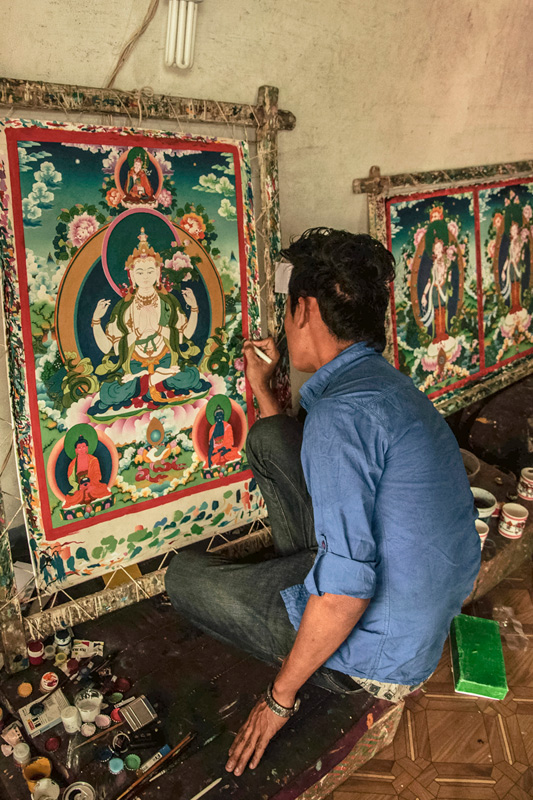
Learning Thangka is considered a form of meditation. Traditionally, artists paint with a calm mind, often reciting mantras or setting intentions. The process cultivates concentration, humility, and devotion—qualities central to Buddhist practice.
Mistakes are treated as lessons rather than failures, reinforcing inner growth alongside technical skill.
Who Can Learn Thangka Art?
Thangka learning is open to anyone with sincerity and patience. You do not need prior artistic experience—only dedication and respect for the tradition. Beginners often start with simple motifs before progressing to complex deity forms.
Today, Thangka is taught through workshops, monasteries, and guided courses, making this ancient art accessible worldwide.
Why Thangka Learning Matters Today
In a fast-paced modern world, Thangka art offers a return to intentional living. It encourages deep focus, cultural appreciation, and spiritual awareness. Learning Thangka is not just about creating art—it is about preserving a sacred heritage and transforming the mind through mindful creation.
Conclusion: A Path of Art and Awakening
Learning Thangka painting is a lifelong journey that blends art, philosophy, and spirituality. Each brushstroke becomes an act of awareness, and each completed painting becomes a bridge between inner contemplation and outer expression.