






















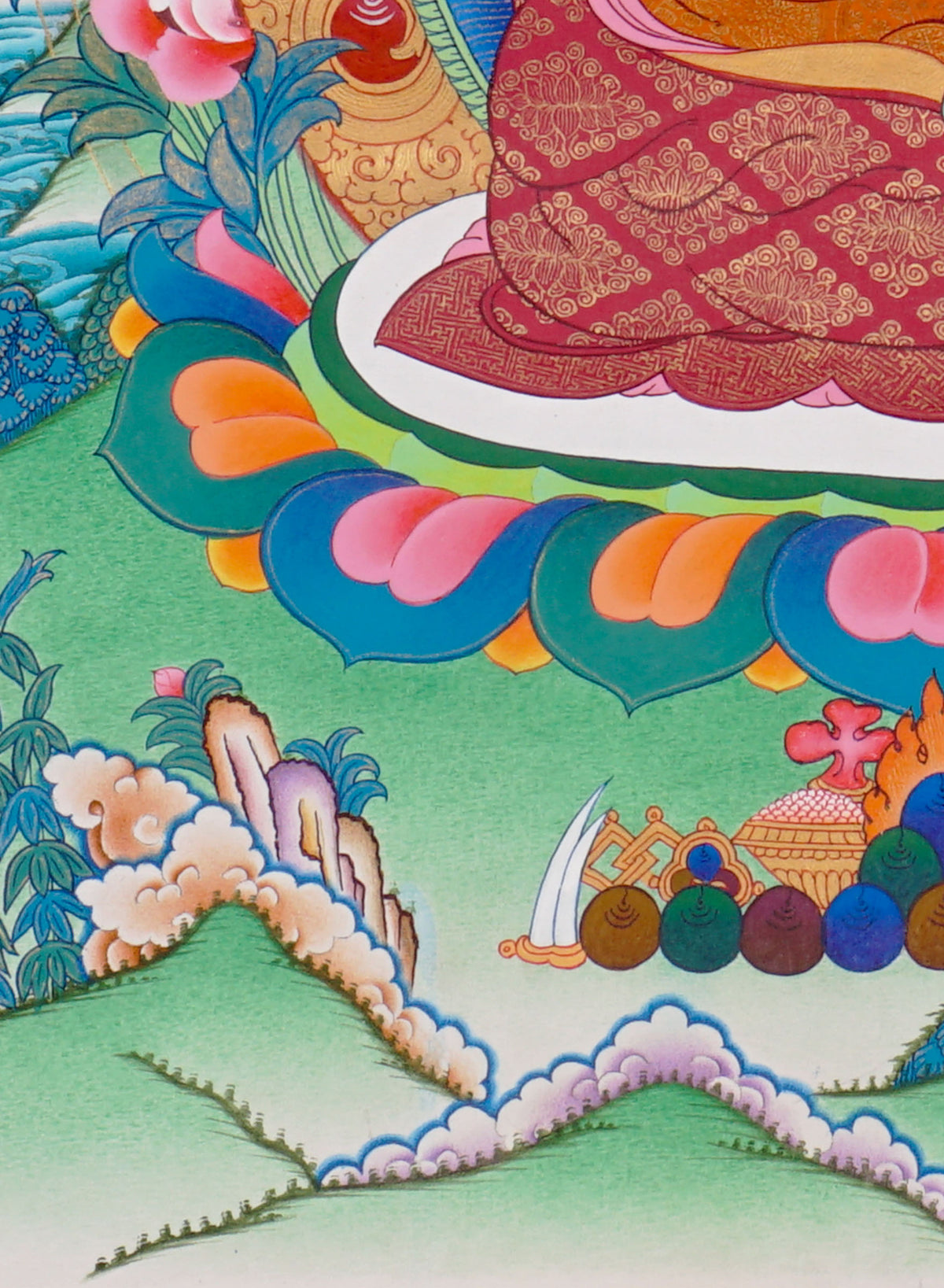

Hand-Painted Sixteen Karmapas Thangka Set | Lineage Masters of the Karma Kagyu Tradition | Traditional Tibetan Buddhist Art
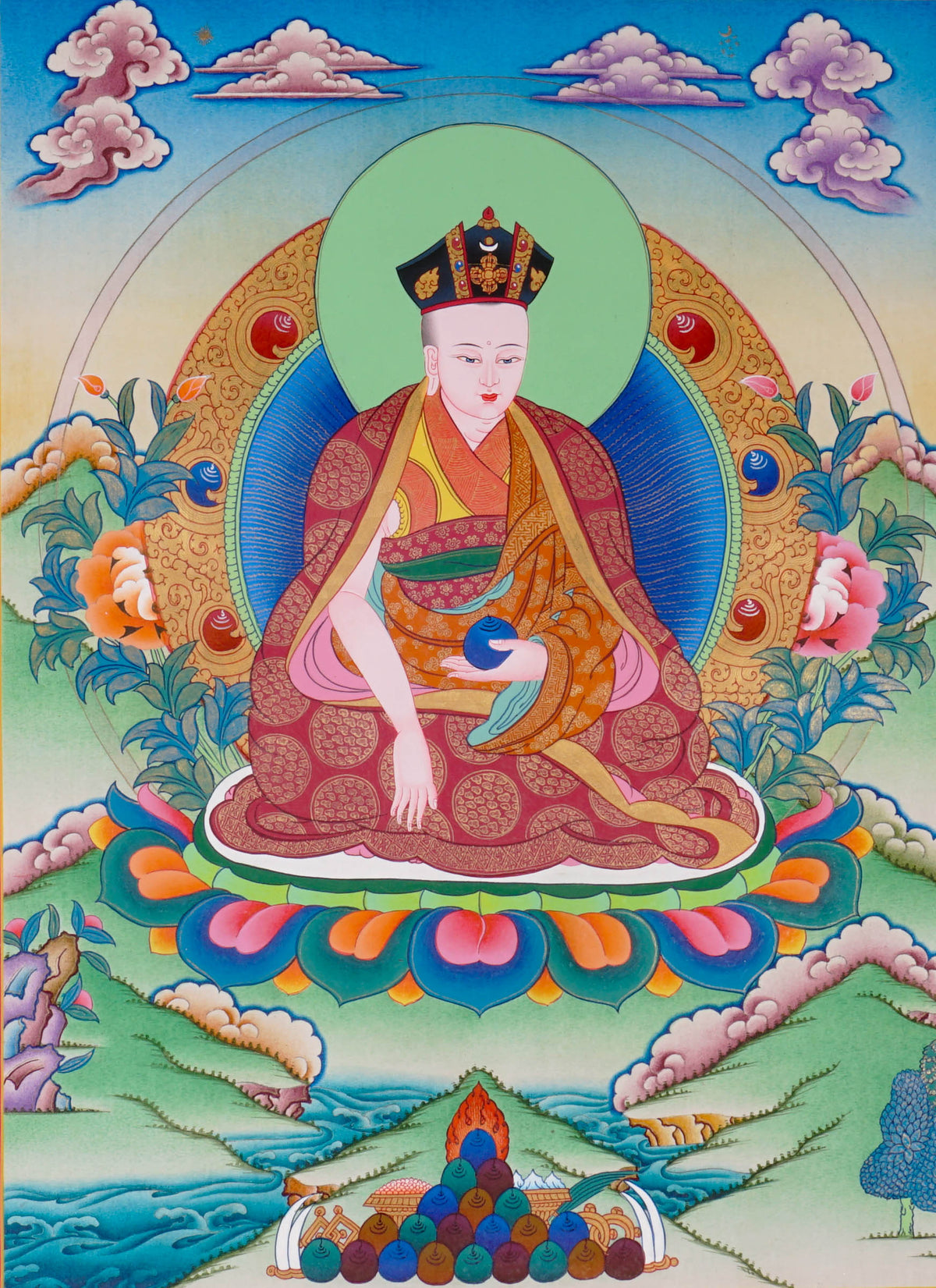
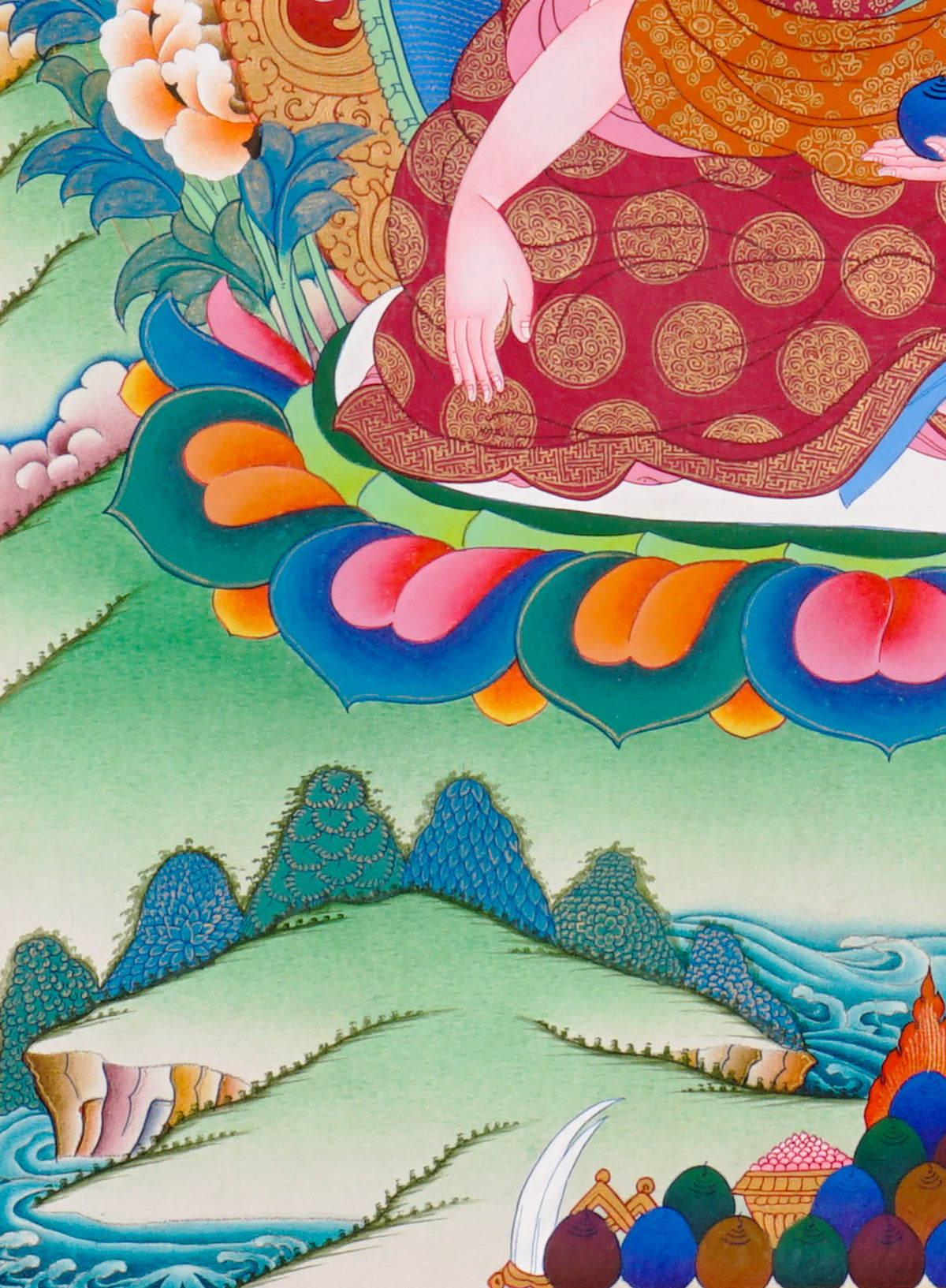
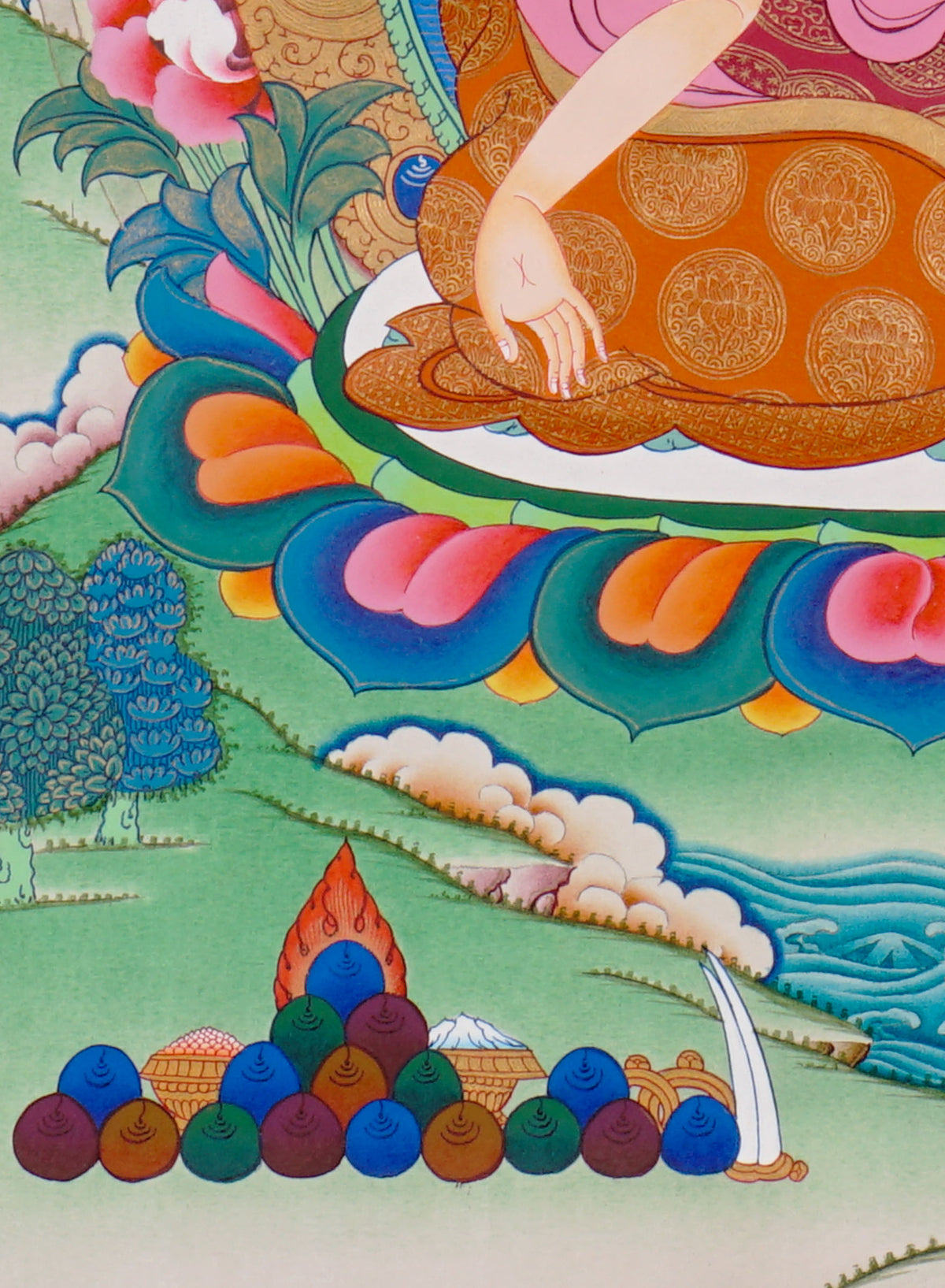
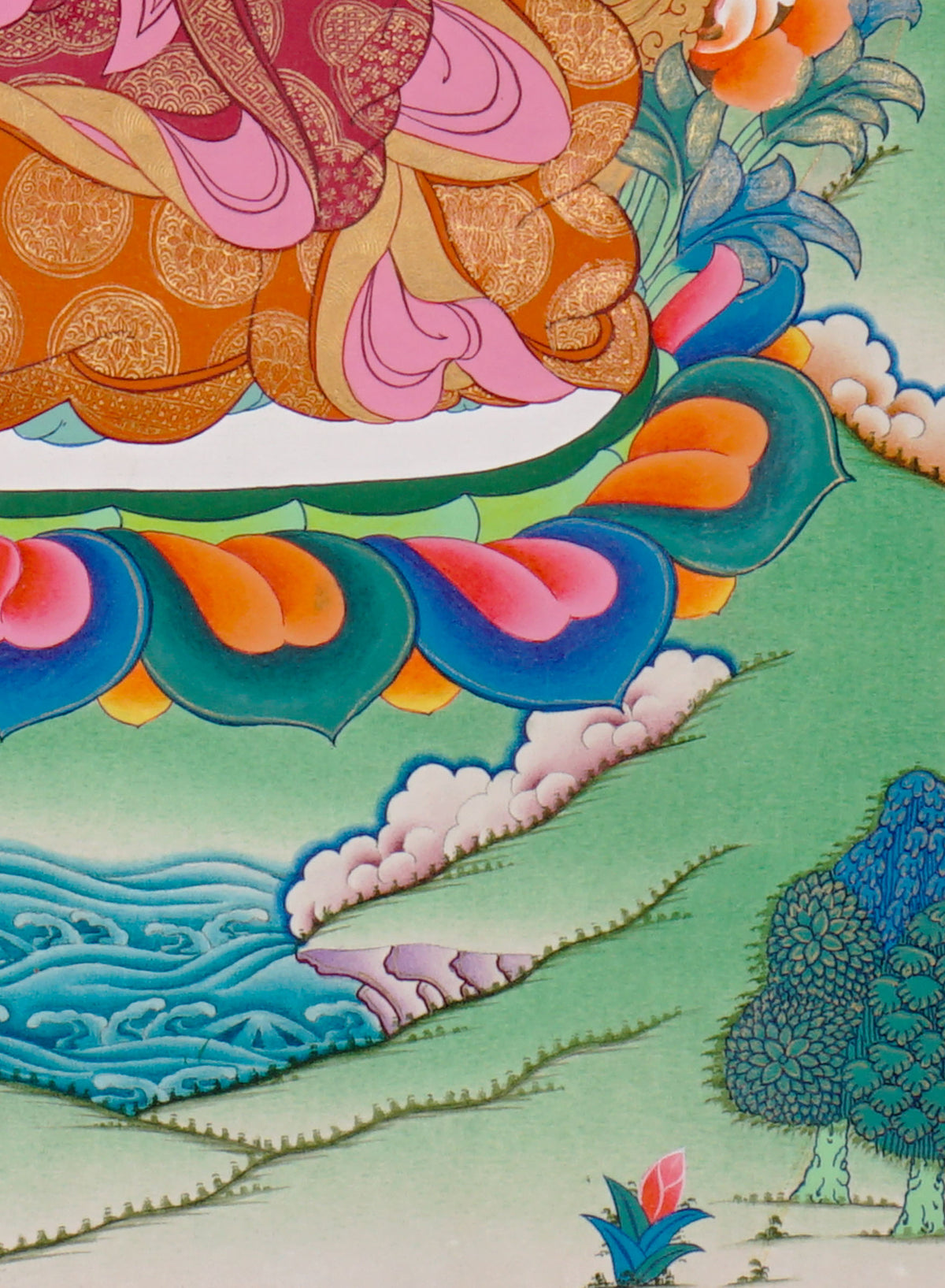
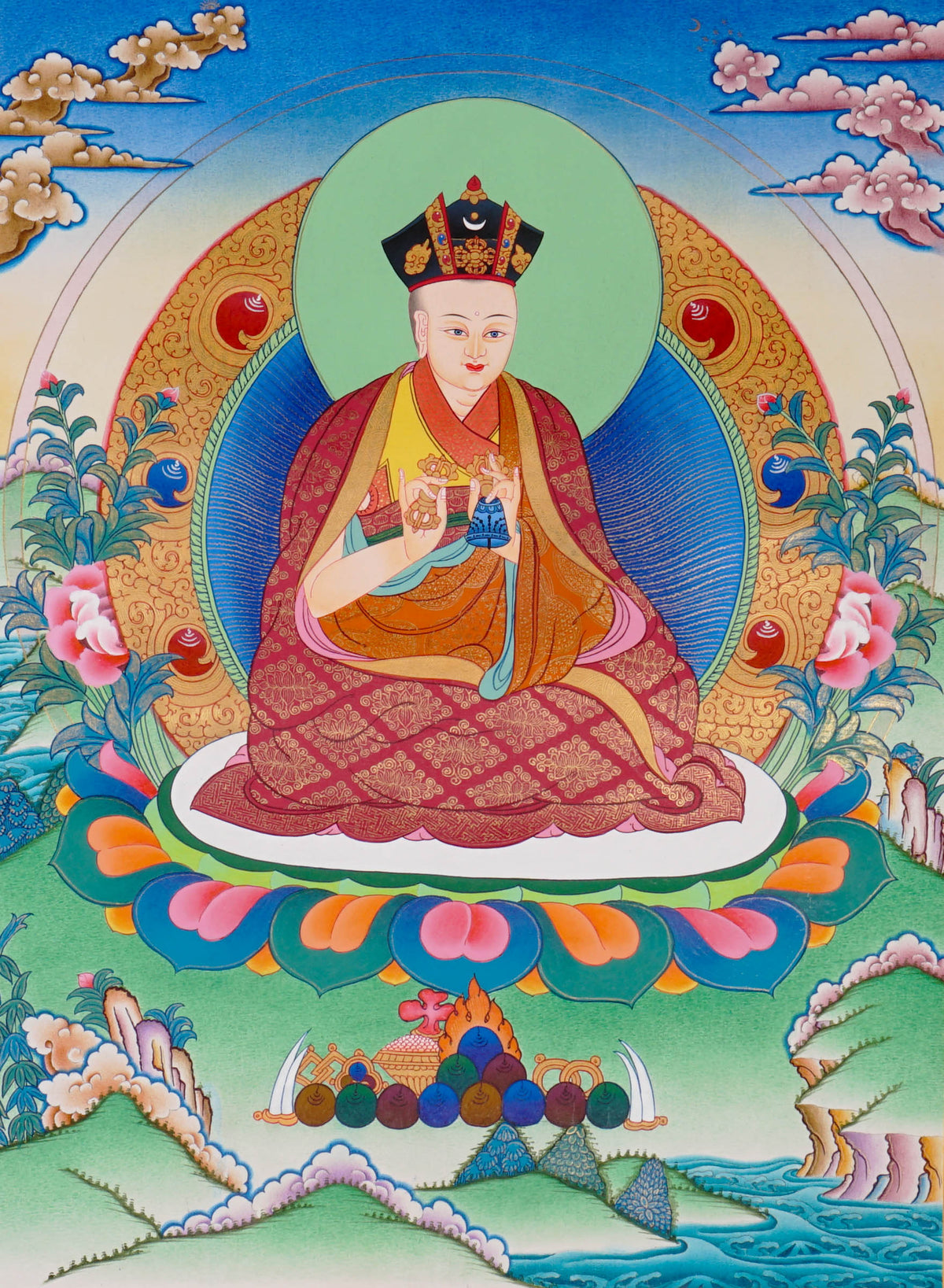
This exquisite hand-painted Sixteen Karmapas Thangka Set represents the revered lineage of the Gyalwang Karmapas, the spiritual heads of the Karma Kagyu school of Tibetan Buddhism. Each painting portrays an incarnation of the Karmapa lineage, one of the oldest reincarnate lama traditions in Tibetan Buddhism, celebrated for preserving profound teachings on meditation, compassion, wisdom, and enlightened activity.
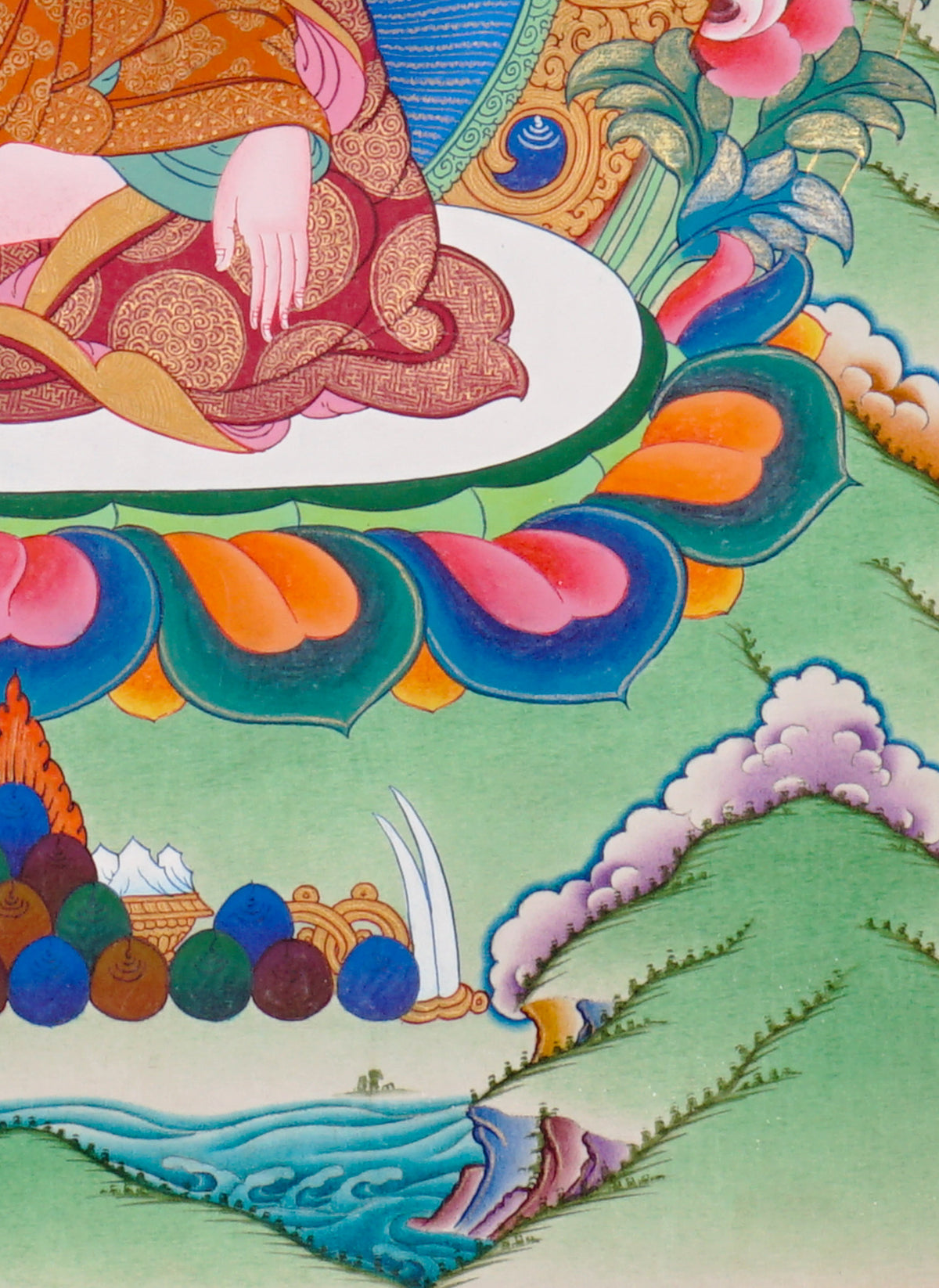
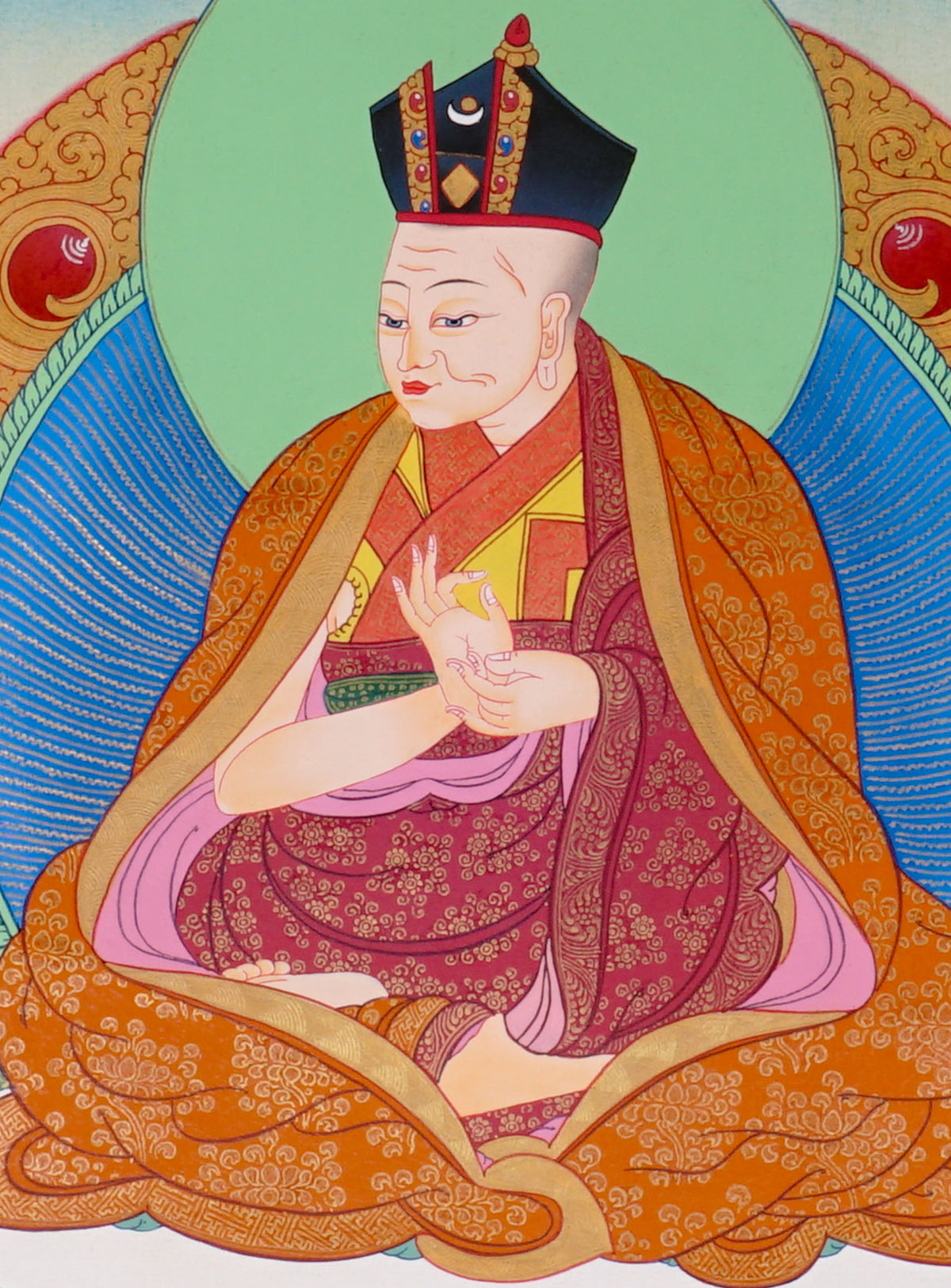
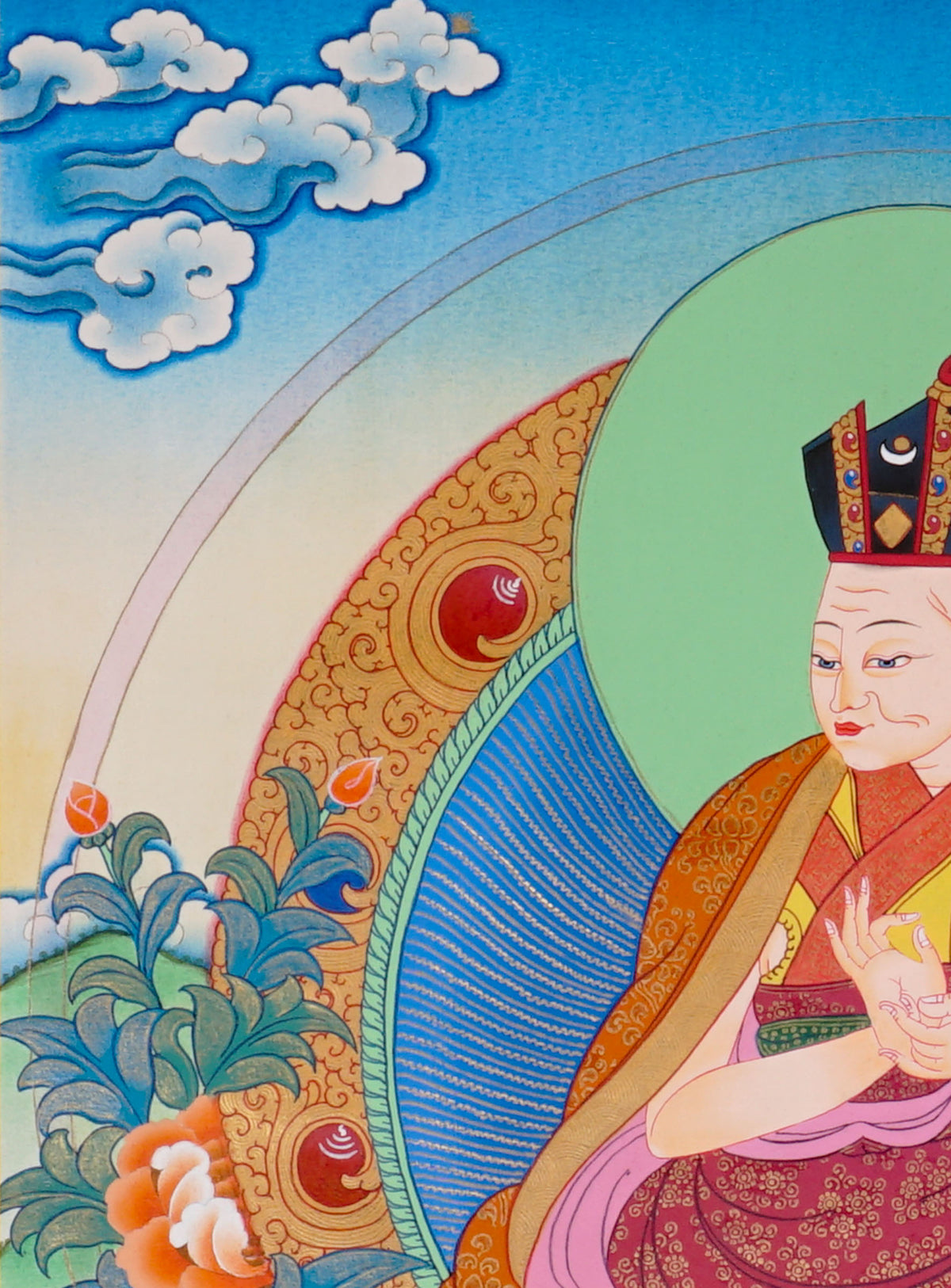
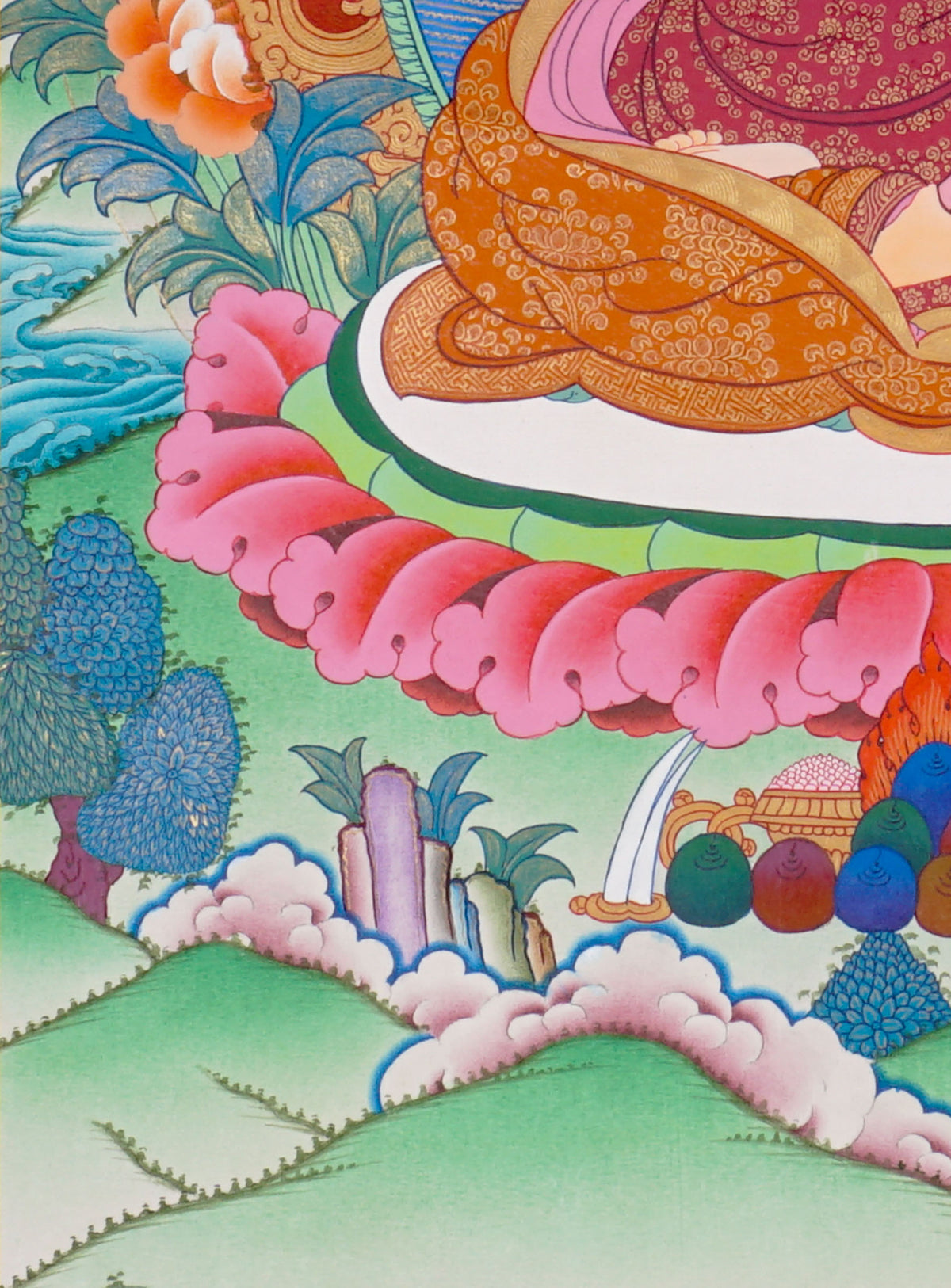
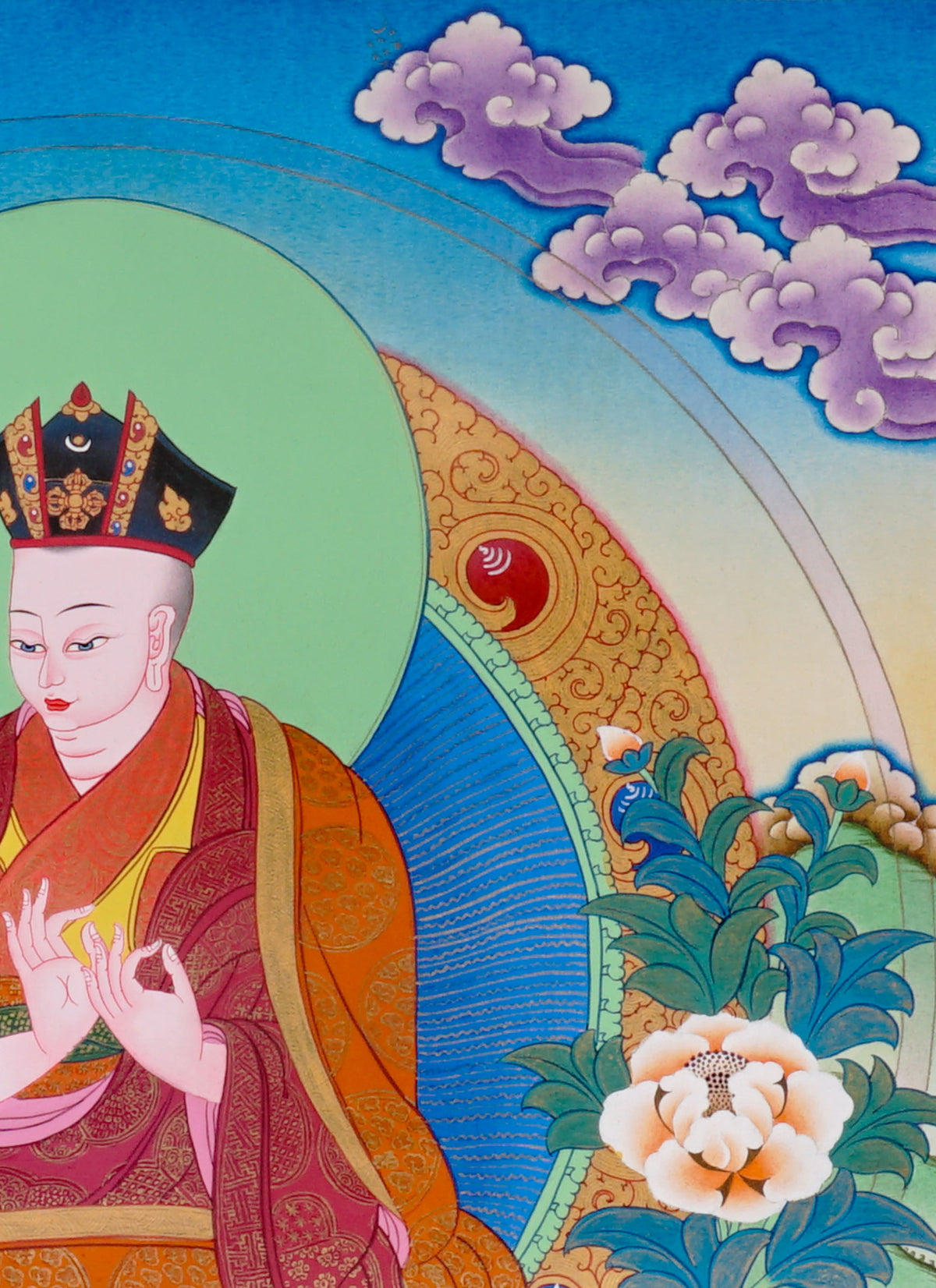
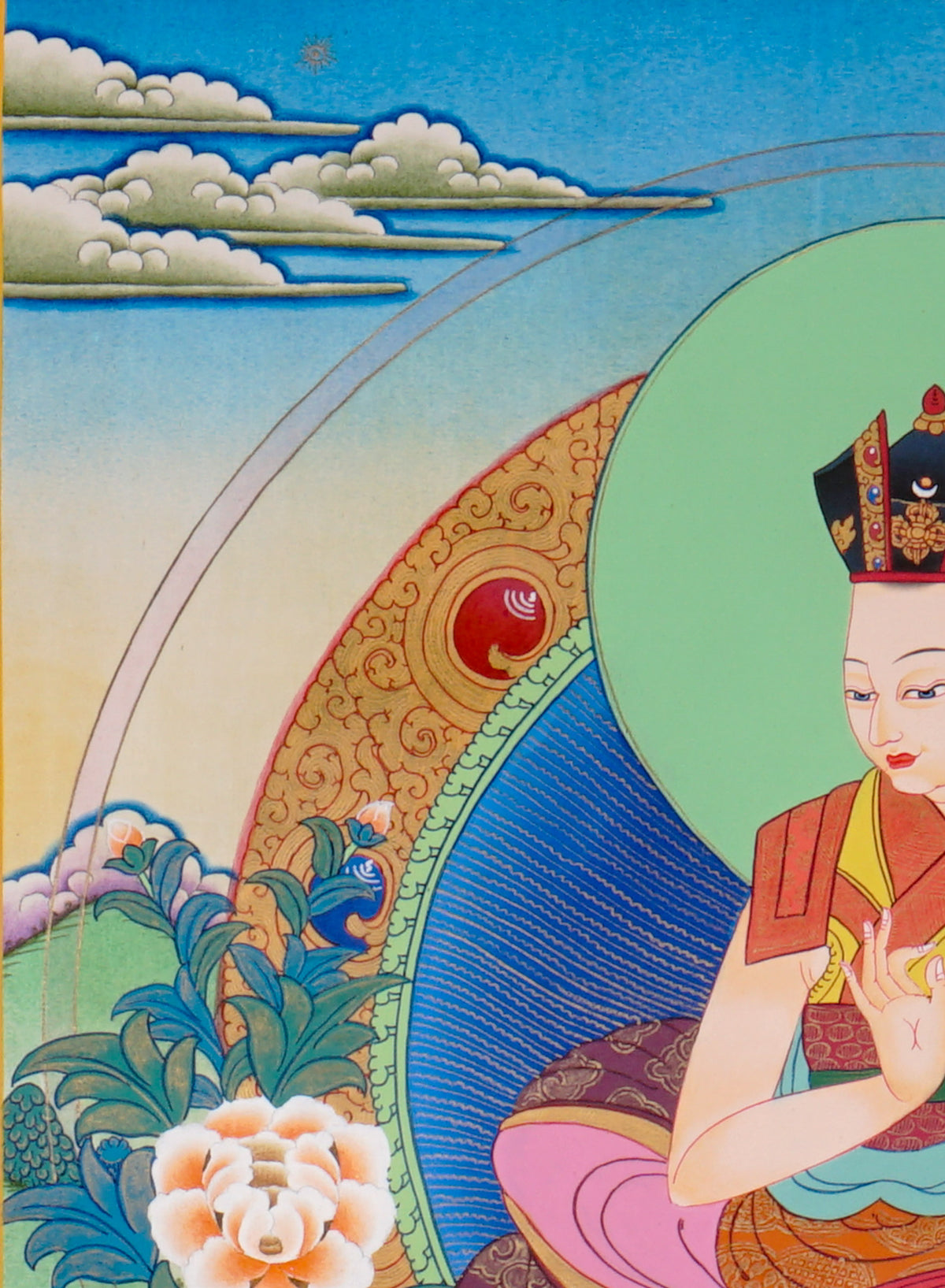
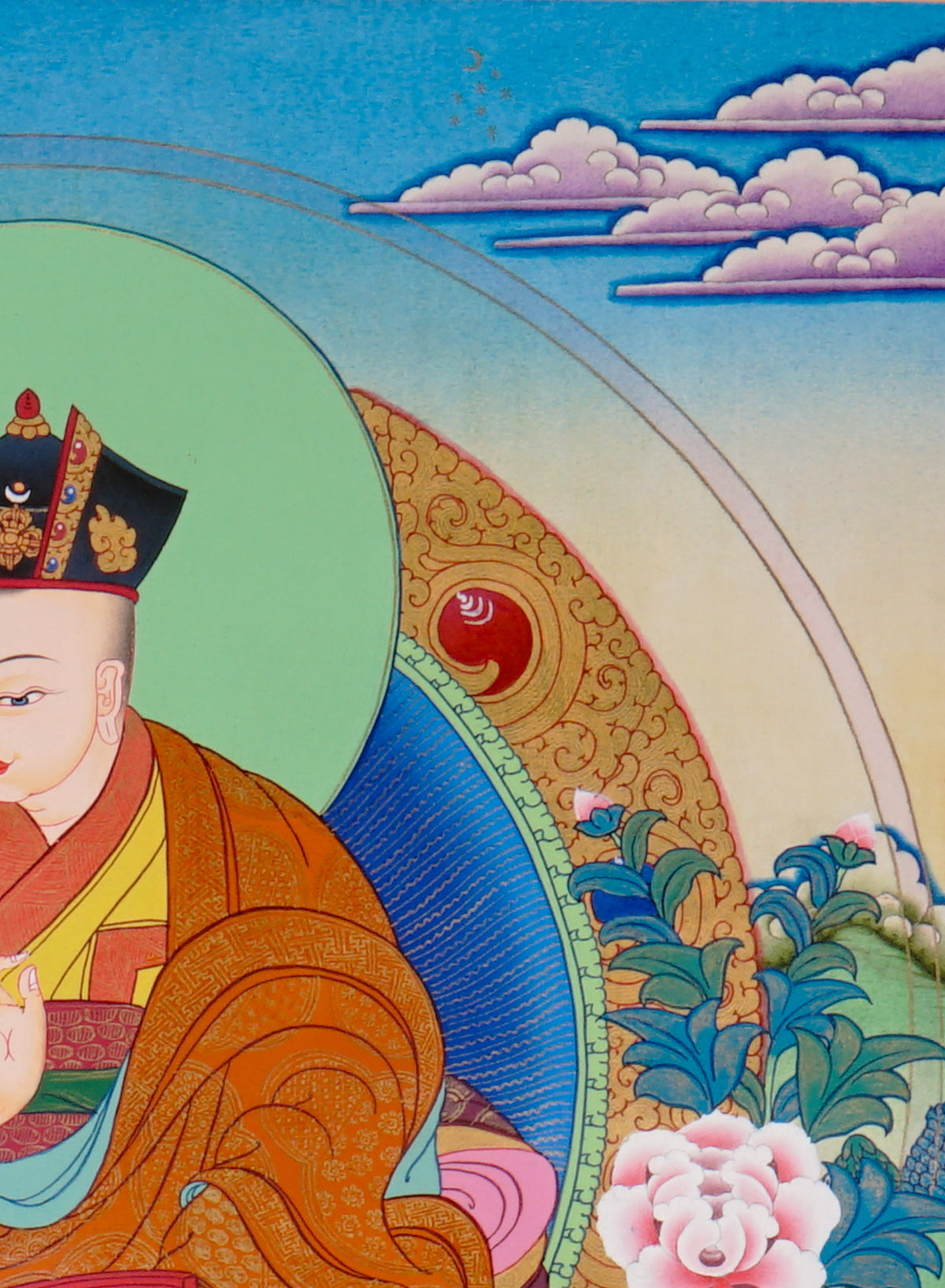
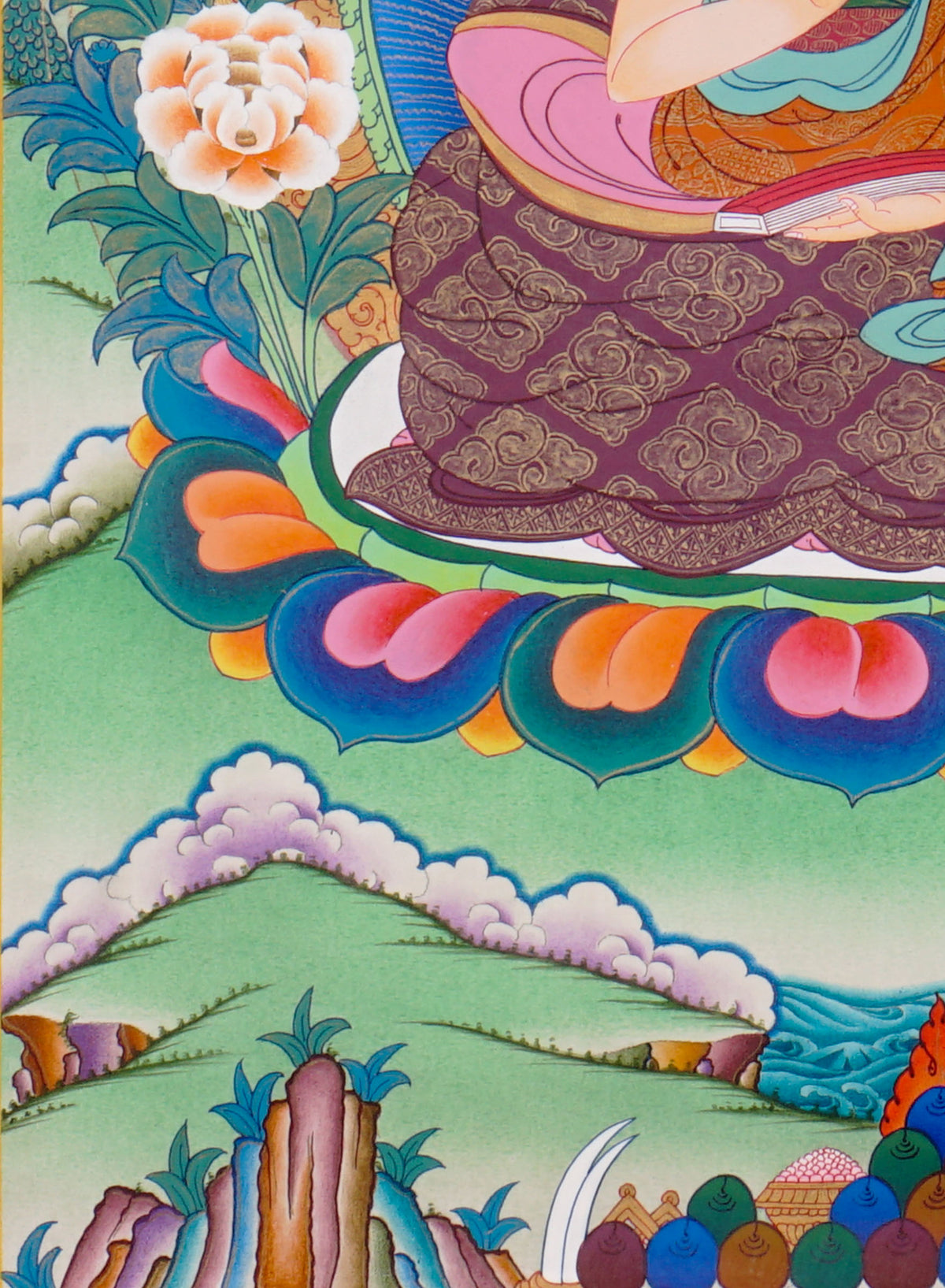
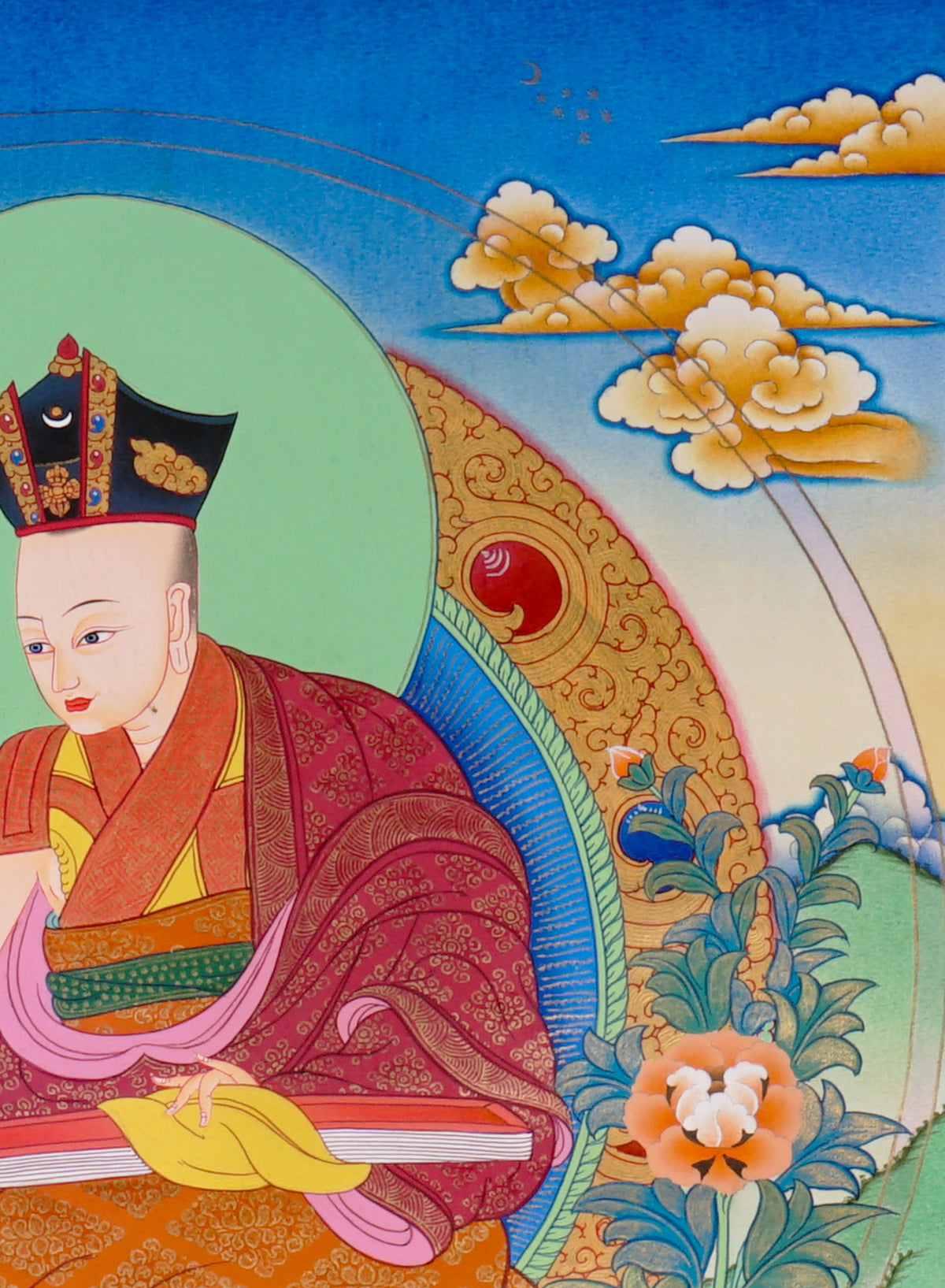
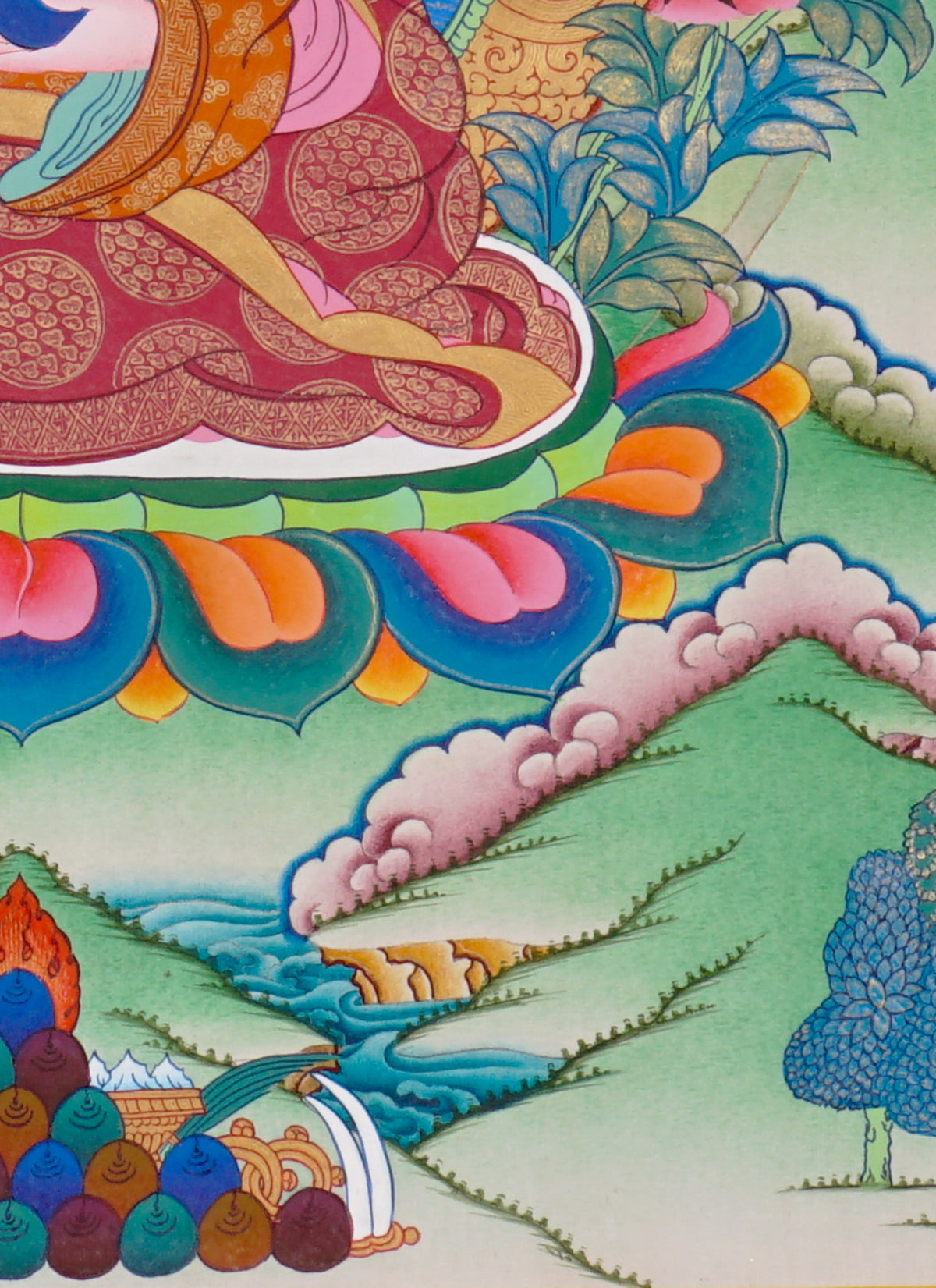
Rendered in vibrant mineral pigments with delicate gold detailing, each thangka depicts an individual Karmapa seated upon a lotus throne surrounded by peaceful Himalayan landscapes, sacred clouds, blossoming flowers, and symbolic offerings. Together, the complete set forms a visual spiritual genealogy honoring centuries of Buddhist realization, transmission, and compassionate guidance.
Every Karmapa image carries unique mudras, ritual implements, symbolic gestures, and meditative expressions that reflect the enlightened qualities and accomplishments of each lineage holder. The harmonious color palette of deep blues, soft greens, rich saffron robes, and luminous lotus seats creates a serene spiritual atmosphere ideal for meditation spaces, Buddhist shrines, and sacred art collections.
Meticulously hand-painted by skilled Himalayan artisans in Nepal, this complete set preserves authentic Tibetan thangka painting traditions passed down through generations.
Individual Description of Each Thangka
1. Düsum Khyenpa (1110–1193), “Knower of the Three Times.” Born Gephel in Teshö, Kham, he was the first link in the unbroken Karmapa line — the oldest tulku lineage in Tibet. A student of Gampopa and Phagmodrupa, he founded Tsurphu Monastery in 1187, still the principal Karmapa seat, and inaugurated Tibet’s tulku system by leaving the first written prediction letter (zhal chems).
Iconography: dhyana mudra, both hands resting in the lap; plain compositions and a calm, elderly face with no imperial attributes.
2. Karma Pakshi (1204–1283), “Karma Master.” Teacher to Möngke Khan, he is remembered for miracles — stopping the sun, levitating, surviving fire, poison, and imprisonment under Kublai Khan. He established Bernakchen (Black-Cloaked Mahakala) as the lineage’s principal protector and began the Profound Inner Meaning.
Iconography: vitarka or abhaya mudra, sometimes a skull cup; a fierce, penetrating face. The appearance of Bernakchen in subsidiary panels is a near-definitive marker.
3. Rangjung Dorje (1284–1339), “Self-Arisen Vajra.” An intellectually towering Karmapa and Nyingma master who synthesised Kagyu mahamudra with Nyingma dzogchen. He authored the Profound Inner Meaning, Distinguishing Consciousness from Wisdom, and the still-recited Aspiration Prayer of Mahamudra. Legend says his face appeared in the moon after his death in China
Iconography: dharmachakra mudra with texts nearby; the joint presence of Kagyu and Nyingma elements — notably Guru Rinpoche above — is diagnostic.
4. Rolpe Dorje (1340–1383), “Playful Vajra.” Born in Kongpo, a major figure at the Yuan court, he became the first teacher of Je Tsongkhapa, conferring bodhisattva vows on the future Gelug founder. Iconography: varada mudra (gift-bestowing) with a notably youthful, graceful face — the youngest-looking of the early four. A small figure of Tsongkhapa in commemorative thangkas is a definitive clue.
5. Deshin Shekpa (1384–1415), “He Who Goes Thus.” Invited to the Ming court by the Yongle Emperor in 1407, his visit produced famous miraculous signs and the embroidered physical Black Crown used in the Black Crown Ceremony ever since. He refused to be named state lama of all China
Iconography: the physical Black Crown held aloft or vitarka in imperial-audience posture; Ming offering vessels and celestial rainbows mark him.
6. Thongwa Dönden (1416–1453), “Meaningful to Behold.” His name reflects the teaching that liberation can come from simply seeing an enlightened master. Trained at Tsurphu, he continued large-format thangkas, codified the Black Crown Ceremony, and taught the Six Yogas of Naropa. Iconography: dhyana mudra, elegant symmetrical compositions with gold robes. Lacking distinctive attributes, he is identified mainly by sequential position and inscription.
7. Chödrak Gyatso (1454–1506), “Ocean of Dharma Renown.” A great scholar-Karmapa, he founded the Karma Shri Nalanda Institute at Tsurphu, debated the emerging Gelug school, and corresponded with the 2nd Dalai Lama. Works include a commentary on the Abhisamayalamkara.
Iconography: dharmachakra mudra with a sutra volume in the left hand and an elaborate teaching throne — the book attribute is his strongest marker.
8. Mikyö Dorje (1507–1554), “Immovable Vajra.” Among the most prolific Karmapas, he wrote over thirty volumes and defended the Shentong view. Most consequentially, he sponsored the Karma Gadri painting style of naturalistic blue-green landscapes and Chinese cloud motifs.
Iconography: vitarka mudra, a sharp intellectual face, sometimes a pen or ink-brush; the surrounding Karma Gadri painterly style is his most diagnostic feature.
9. Wangchuk Dorje (1556–1603), “Powerful Vajra.” One of the most practically influential Karmapas, he wrote three foundational mahamudra manuals still in active use: Removing the Darkness of Ignorance, the Ocean of Definitive Meaning (used in three-year retreats), and Pointing Out the Dharmakaya. Iconography: vitarka mudra pointing assertively upward, sometimes a vajra; an upright, commanding posture. The three mahamudra texts shown as offered volumes also mark him.
10. Chöying Dorje (1604–1674), “Vajra of the Dharmadhatu.” His life was among the most turbulent — decades of exile from Tsurphu as the Gelug consolidated political power. He wandered Bhutan, Nepal, and remote Tibet, turning hardship into a demonstration of non-attachment, and was a gifted artist, poet, and retreat master. Iconography: a paintbrush in the right hand — unique among all sixteen — or a simple meditation mudra; ascetic robes and Himalayan landscapes. The paintbrush is his single most distinctive marker.
11. Yeshe Dorje (1676–1702), “Wisdom Vajra.” He died at twenty-six, yet received and transmitted all major Karma Kagyu initiations, preserving the lineage’s continuity. His brief life is read as a deliberate demonstration of the bodhisattva’s mastery over rebirth and death. Iconography: dhyana mudra; an extremely youthful face, often appearing younger and smaller in lineage thangkas — his primary identifier.
12. Changchub Dorje (1703–1732), “Enlightenment Vajra.” Enthroned at Tsurphu, he held the lineage together through the catastrophic Dzungar invasion (1717–1720), made a major pilgrimage to China to meet the Kangxi Emperor, and died at twenty-nine on the return. Iconography: vitarka mudra with Chinese imperial-court elements in Qing-dynasty style. Since the 5th Karmapa also carries imperial context, the Qing-versus-Ming styling and the inscription are the differentiators.
13. Dudul Dorje (1733–1797), “Demon-Subduing Vajra.” One of the longer-lived later Karmapas, he rebuilt the Karma Kagyu after the Dzungar devastation and collaborated with Situ Panchen Chökyi Jungne to preserve rare lineages. Iconography: tarjani mudra (wrathful summoning gesture) or vitarka, with wrathful protector deities prominent in subsidiary panels. The tarjani gesture echoes his demon-subduing name.
14. Thekchok Dorje (1798–1868), “Supreme Vehicle Vajra.” A pivotal figure in the 19th-century Rime movement, he was teacher and collaborator of Jamgon Kongtrul Lodro Thaye, encouraged the encyclopaedic Five Treasuries project, and saved the Shangpa Kagyu lineage from extinction.
Iconography: varada mudra reflecting cross-lineage generosity; a Rime-style composition. The prominent presence of Jamgon Kongtrul as a subsidiary figure is a near-definitive marker.
15. Khakyab Dorje (1871–1922), “Sky-Pervading Vajra.” Deeply engaged in the mature Rime movement, he was a prolific author of prayers and liturgies who preserved Nyingma Terma traditions, trained the 16th Karmapa, and unusually lived in part as a semi-householder.
Iconography: vitarka mudra or a held mala, with Nyingma deities such as Guru Rinpoche prominent above. The mala plus Nyingma upper-register figures mark his Rime orientation.
16. Rangjung Rigpe Dorje (1924–1981), “Self-Arisen Vajra of Awareness.” Among the best-known 20th-century Tibetan masters, he escaped the Chinese occupation in 1959 and founded Rumtek Monastery in Sikkim as the exile headquarters. He toured the West founding dharma centres, reprinted and freely distributed the Derge Kangyur and Tengyur, gave the Black Crown Ceremony to hundreds of thousands, and trained the four principal regents. He is famously remembered for his 1981 death in Zion, Illinois, where his body showed no deterioration for three days.
Iconography: vitarka mudra or the physical Black Crown held aloft, often in a naturalistic pose; modern robes with Rumtek architecture. His is the most ‘modern’ composition, with the physical Black Crown the definitive marker.
Symbolic Meaning & Spiritual Significance
This complete Sixteen Karmapas thangka set symbolizes:
- Continuity of the Karma Kagyu lineage
- Transmission of enlightened wisdom across generations
- Compassionate guidance of Buddhist masters
- Meditation, realization, and spiritual awakening
- Sacred guru-disciple lineage connection
- Preservation of Tibetan Buddhist teachings
- Protection, blessing, and spiritual inspiration
- Devotional support for practitioners and collectors
The set serves as both a sacred spiritual collection and a historical visual representation of one of Tibetan Buddhism’s most important lineages.
Traditional Himalayan Craftsmanship
- Hand-painted in Nepal by master thangka artisans
- Executed according to authentic Tibetan Buddhist iconography
- Fine cotton canvas base
- Natural mineral and stone pigments
- Intricate gold detailing and ornamental robe patterns
- Traditional lotus throne compositions
- Delicate landscape, cloud, and floral motifs
- Precision linework and harmonious color layering
Each thangka is individually painted through devotional artistic practice rooted in centuries-old Himalayan traditions.
Ideal For
- Buddhist shrine rooms
- Karma Kagyu practitioners
- Meditation and contemplation spaces
- Sacred altar displays
- Dharma centers and monasteries
- Spiritual art collections
- Tibetan Buddhist devotees
- Himalayan art enthusiasts
This complete Karmapa lineage set offers profound spiritual significance for practitioners devoted to the Karma Kagyu tradition and collectors of authentic Tibetan Buddhist art.
Product Specifications
- Subject: Sixteen Karmapas Lineage Set
- Tradition: Tibetan Buddhism (Karma Kagyu School)
- Origin: Hand-painted in Nepal
- Material: Cotton canvas
- Painting Size: 50cm x 38cm (size may vary according to the art and artist)
- Medium: Natural mineral pigments with gold detailing
- Depiction: Sixteen incarnations of the Karmapa lineage
- Style: Traditional Tibetan thangka painting
- Use: Meditation, shrine décor, lineage collection, spiritual display
- Set Includes: 16 individual hand-painted thangkas
- Custom Sizes: Available upon request
Meaning & Spiritual Significance
- Authentic Tibetan Thangka paintings represent centuries of Buddhist wisdom, meditation, compassion, and sacred Himalayan traditions.
- Every hand-painted Thangka features meaningful symbols, mudras, colors, and deities that inspire mindfulness and spiritual practice.
- Ideal for Buddhist meditation rooms, home altars, yoga studios, and spiritual home décor, bringing peace and positive energy.
- Each Buddhist Thangka painting from Nepal reflects authentic craftsmanship and traditional iconography.
Materials & Craftsmanship
- Every authentic hand-painted Thangka is carefully created by experienced Nepali artists using traditional Himalayan painting techniques.
- Painted on premium cotton canvas using natural mineral pigments, fine brushwork, and genuine artistic methods.
- Every artwork is individually handcrafted, making each Tibetan Thangka painting a unique collectible.
- Produced with exceptional attention to detail, preserving centuries-old Buddhist artistic traditions.
Care & Display Guide
- Display your authentic Thangka painting away from direct sunlight, moisture, and excessive humidity to preserve its vibrant colors.
- Hang your Buddhist wall art in meditation rooms, living spaces, prayer rooms, or offices for a peaceful atmosphere.
- Store rolled rather than folded to protect the cotton canvas and intricate hand-painted details.
- Traditional silk brocade framing is recommended for long-term preservation and an elegant presentation.
Perfect For
- Perfect for meditation rooms, yoga studios, Buddhist temples, home altars, offices, and spiritual living spaces.
- A meaningful gift for Buddhist practitioners, Thangka collectors, art enthusiasts, and meditation lovers.
- Ideal as traditional Himalayan wall art, Buddhist home décor, or a collectible handmade Thangka painting.
- Adds authentic Nepalese craftsmanship, cultural heritage, and timeless beauty to any interior.
Choose options